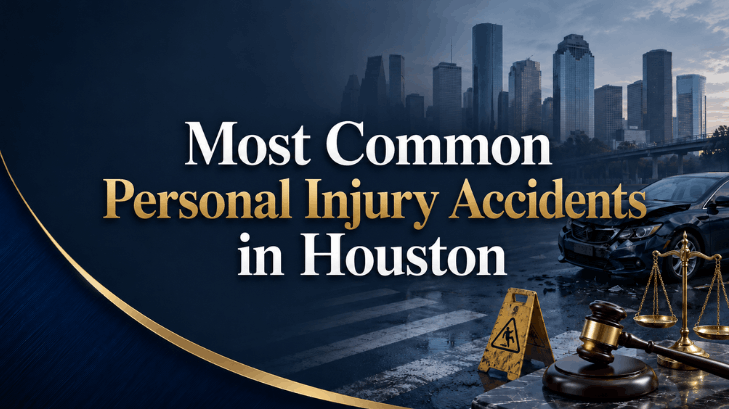
Houston’s size, traffic volume, and mix of highways, worksites, and public spaces make it a place where accidents happen often. Whether it’s a rear-end collision on I-45 or a slip and fall at a grocery store, thousands of Houston residents deal with the aftermath of an unexpected injury every year.
Understanding which accidents happen most frequently — and why — can help you recognize your situation, know what documentation matters, and understand the general legal process before deciding on next steps. This guide breaks down the most common types of personal injury accidents in Houston, using general legal information rather than legal advice.
Because Houston sees such heavy traffic and a dense mix of workplaces, retail centers, and residential areas, no two accidents unfold in exactly the same way. That’s why this article focuses on general patterns and publicly available information rather than predictions about any individual case.
Quick Answer
The most common personal injury accidents in Houston include motor vehicle collisions (car, truck, and motorcycle crashes), pedestrian and bicycle accidents, slip and fall incidents on commercial or residential property, workplace injuries, and dog bites. Motor vehicle crashes remain the leading cause of injury claims in the city due to heavy traffic, long commutes, and major highways like I-45 and I-10. Laws around fault, evidence, and deadlines vary by situation, so anyone injured should review their specific facts with a licensed Texas attorney.
Main Highlights
- Motor vehicle accidents, including car, truck, and motorcycle crashes, are consistently the most frequent cause of personal injury claims in Houston.
- Heavy congestion on highways such as I-45, I-10, and US-59, along with speeding and distracted driving, contribute to a large share of Houston-area crashes.
- Pedestrians and cyclists face elevated risk in a city built around vehicle traffic, particularly near intersections with limited pedestrian infrastructure.
- Slip and fall accidents on commercial or residential property fall under premises liability, a separate area of personal injury law with its own evidence requirements.
- Workplace injuries are common in Houston’s industrial, construction, and energy sectors and may involve workers’ compensation rules instead of a standard injury claim.
- Every accident type has its own evidence needs and timelines, and Texas law generally applies a two-year statute of limitations to most personal injury claims, though exceptions exist.
Why Houston Sees So Many Personal Injury Accidents
Houston is one of the largest and most heavily trafficked cities in the country. Several factors combine to make accidents more frequent here than in many other U.S. cities:
- Population size and sprawl. Houston’s metro area covers a large geographic footprint, meaning most residents rely on cars for daily travel, which increases overall road exposure.
- Highway density. Major interstates like I-45 (the Gulf Freeway), I-10, and US-59 carry heavy commuter and commercial truck traffic, and sections of I-45 are frequently identified as among the more accident-prone corridors in the country.
- Weather conditions. Sudden heavy rain, flooding, and humidity-related visibility issues are common in the Houston area and can contribute to hazardous driving and walking conditions.
- Industrial and energy-sector activity. Houston’s economy includes a large share of construction, manufacturing, shipping, and energy-related work, which carries a higher risk of on-the-job injuries compared to office-based industries.
- Dense retail and commercial corridors. High foot traffic in shopping centers, apartment complexes, and public venues increases the chances of slip and fall or premises-related incidents.
According to data published by the Texas Department of Transportation (TxDOT), Houston consistently records more total motor vehicle crashes each year than any other city in Texas, a pattern connected to its size, traffic volume, and road network. Trends like these are why motor vehicle accidents remain the single largest category of personal injury claims filed by Houston residents.
1. Motor Vehicle Accidents
Car, truck, and motorcycle accidents make up the largest share of personal injury cases in Houston. Common contributing factors reported by TxDOT and safety researchers include speeding, distracted driving (especially phone use), impaired driving, and failure to yield at intersections.
Common scenarios include:
- Rear-end collisions in stop-and-go traffic on highways like I-610 or the Sam Houston Tollway.
- Intersection crashes involving left turns or failure to yield.
- High-speed freeway crashes on I-45, particularly during peak commuting hours.
- Commercial truck accidents, which often involve larger vehicles, complex insurance coverage, and multiple potentially responsible parties.
- Motorcycle accidents, where riders face a higher risk of serious injury due to limited physical protection.
Determining fault after a crash usually depends on evidence such as police reports, traffic camera footage, witness statements, and vehicle damage patterns. If you’re trying to understand how investigators and insurers piece together responsibility, this overview of evidence that proves fault after a car accident walks through what typically gets reviewed.
Injuries from these crashes range from minor soft-tissue strains to more serious conditions like fractures, spinal injuries, or head trauma. For a closer look at what injuries commonly result from Houston-area collisions, see this breakdown of injuries that are common after car accidents.
2. Pedestrian and Bicycle Accidents
Because much of Houston was built around vehicle traffic rather than pedestrian infrastructure, people walking or biking near busy roads face real risk, particularly at intersections without protected crossings or bike lanes. Pedestrian accidents often involve serious injuries because there is little to no physical protection between a person and a vehicle.
Common situations include:
- Crosswalk accidents where a turning vehicle fails to yield to a pedestrian with the right of way.
- Nighttime accidents involving poor lighting or low driver visibility.
- Bicycle accidents on roads without designated bike lanes.
- School zone and residential street incidents involving children or joggers.
3. Slip and Fall / Premises Liability Accidents
Slip and fall accidents fall under a legal category called premises liability, which involves a property owner’s responsibility to maintain reasonably safe conditions. These incidents commonly happen at grocery stores, apartment complexes, restaurants, parking lots, and other commercial or residential properties.
Common causes include:
- Wet or recently mopped floors without warning signs.
- Uneven sidewalks, broken stairs, or poor lighting.
- Spilled liquids or debris left in walkways.
- Icy or slick surfaces during rare winter weather events.
Unlike car accidents, slip and fall claims often hinge on whether the property owner knew, or reasonably should have known, about the hazard and failed to fix it or warn visitors in time. This makes documentation, such as photos of the hazard and incident reports, especially important.
4. Workplace Accidents
Houston’s economy relies heavily on construction, shipping, manufacturing, and energy-sector jobs, all of which carry elevated physical risk compared to many other industries. Workplace injuries can range from repetitive strain injuries to serious incidents involving heavy machinery, falls from height, or exposure to hazardous materials.
In many cases, a workplace injury is handled through the Texas workers’ compensation system rather than a traditional personal injury lawsuit, though there are exceptions depending on the employer’s coverage status and the circumstances of the injury. The Texas Department of Insurance, Division of Workers’ Compensation, provides official guidance on how the state workers’ comp system operates for employees and employers.
5. Dog Bites and Animal Attacks
Dog bite incidents are another recurring category of personal injury claims in Houston, particularly in residential neighborhoods. Texas follows what’s often called a “one-bite” approach combined with negligence principles, meaning liability can depend on whether the owner knew or should have known the animal posed a danger. Rules and outcomes vary based on specific facts, so anyone dealing with a dog bite injury should review their situation individually rather than assume a general rule applies.
Evidence and Documentation Checklist
Regardless of which type of accident occurred, certain documentation tends to matter across nearly all personal injury situations in Houston.
| Accident Type | Key Evidence to Gather |
| Car/Truck Accident | Police report, photos of vehicle damage, traffic camera footage, witness contact info, insurance details |
| Pedestrian/Bicycle Accident | Police report, photos of the scene, witness statements, medical records, traffic signal timing if available |
| Slip and Fall | Photos of the hazard, incident report filed with the property, names of witnesses, maintenance or cleaning logs if obtainable |
| Workplace Injury | Incident report filed with employer, medical records, safety inspection history, witness statements |
| Dog Bite | Photos of injuries, animal control report, witness statements, information on the animal’s owner |
Common Mistakes After an Accident
- Not seeking medical attention right away, even when injuries seem minor at first.
- Failing to document the scene with photos or witness information before leaving.
- Giving a recorded statement to an insurance company before understanding the full extent of injuries.
- Missing filing deadlines, since Texas generally applies a two-year statute of limitations to most personal injury claims, though this can vary based on the type of claim and party involved.
- Assuming a claim’s value can be predicted without reviewing medical records, lost wages, and other specific case details. If you’re curious how settlement value is generally assessed, this explainer on personal injury settlements calculations after an accident covers the general factors involved.
When to Speak With an Attorney
Not every accident requires legal representation, but certain situations are worth discussing with a licensed Texas attorney, including cases involving serious injuries, disputed fault, denied insurance claims, workplace injuries with unclear coverage, or accidents involving multiple parties. An attorney can help explain your rights, review evidence, and outline the general process, including personal injury settlement negotiations.
If you’ve also been asked to accept a settlement offer, it can help to understand types of damages that are recoverable in a personal injury case before agreeing to any terms.
Ready to Understand Your Options After a Houston Accident?
If you’ve been hurt in a car accident, fall, or workplace incident in Houston, understanding the general legal process is a helpful first step. Explore more guides on personal injury claims, evidence, and settlement negotiations on USLegalJournal to get a clearer picture before speaking with a licensed attorney about your specific situation.
People Also Ask
What is the most common type of personal injury accident in Houston?
Motor vehicle accidents, including car, truck, and motorcycle crashes, are consistently the most common personal injury cases in Houston due to the city’s traffic volume, highway density, and daily commuter congestion.
Are slip and fall accidents considered personal injury cases?
Yes. Slip and fall accidents fall under premises liability, a branch of personal injury law focused on whether a property owner maintained reasonably safe conditions and addressed known hazards in a timely manner.
How long do I have to file a personal injury claim in Texas?
Texas generally applies a two-year statute of limitations for most personal injury claims, though exceptions exist depending on the type of claim, the parties involved, and other specific circumstances.
Do workplace injuries in Houston go through a personal injury lawsuit?
Often not. Many workplace injuries are handled through the Texas workers’ compensation system rather than a traditional lawsuit, though this depends on the employer’s coverage and the details of the incident.
What should I do immediately after an accident in Houston?
Seek medical attention, document the scene with photos, gather witness information, and file any required reports. Avoid making recorded statements to insurers until you understand the full scope of your injuries.
Frequently Asked Questions
Does Houston have more car accidents than other Texas cities?
Yes, based on TxDOT crash reporting, Houston consistently records a higher total number of reported crashes each year than other major Texas cities, largely due to its size, highway network, and traffic volume.
Can weather conditions affect personal injury claims in Houston?
Weather, such as sudden rain or flooding, can be a contributing factor in accidents, but it does not automatically remove a driver’s or property owner’s responsibility to act reasonably given the conditions.
Is a dog bite in Texas automatically the owner’s fault?
Not automatically. Texas generally looks at whether the owner knew or should have known the animal was dangerous, along with other negligence factors, so outcomes depend on the specific facts involved.
What if I was partly at fault for my accident?
Texas follows a modified comparative negligence system, meaning compensation can be reduced based on your percentage of fault, and a person found more than 50% at fault is generally barred from recovering damages. Specific rules should be reviewed with an attorney.
Do I need a police report for every accident?
Not always required, but a police report is often valuable evidence, particularly for car accidents involving injury or significant property damage. Local reporting thresholds can vary.
Legal Disclaimer
This article is for general informational purposes only and does not provide legal advice. Laws and procedures may vary by state, city, court, agency, or individual situation. For advice about your specific legal issue, speak with a qualified attorney or the appropriate government agency.