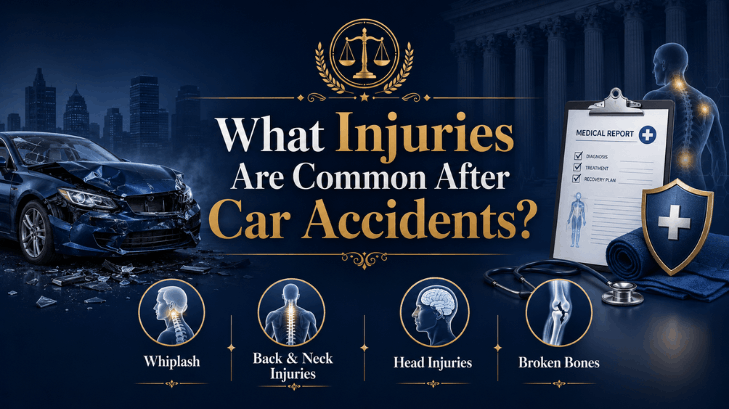
Every year, millions of people across the United States are involved in car accidents. Some walk away with minor bumps and bruises. Others face injuries that take weeks, months, or even years to heal. Whether your accident was a low-speed rear-end collision or a high-impact crash, understanding the injuries that can result is important — both for your health and for any legal steps you may need to take.
Many people feel fine immediately after a collision, only to discover serious symptoms days later. This is because adrenaline can mask pain, and some injuries — like soft tissue damage or internal bleeding — are not obvious right away. Knowing what to look for can make a real difference in your recovery and your ability to document what happened.
This article explains the most common car accident injuries, their symptoms, how they are typically treated, and why they matter in a personal injury or insurance claim. If you were recently in a crash, this guide will help you understand what you may be dealing with and when it is time to speak with a qualified attorney.
Quick Answer: What Are the Most Common Car Accident Injuries?
The most common car accident injuries include whiplash, back and spinal injuries, traumatic brain injuries (TBI), broken bones, soft tissue injuries, and internal injuries. Symptoms may not always appear immediately after the crash. If you were in an accident, it is important to see a doctor right away — even if you feel fine — and to document your injuries carefully. Some injuries can have long-term health and legal consequences.
Quick Summary
- Whiplash is the most frequently reported injury in rear-end car accidents.
- Some injuries, such as traumatic brain injuries and internal bleeding, may not be immediately obvious after a crash.
- Seeing a doctor right after an accident — even without visible symptoms — is critical for both your health and any insurance or legal claim.
- Car accident injury symptoms can appear hours or days after a crash due to adrenaline and delayed inflammation.
- Injuries can affect your ability to work, drive, and perform daily activities, which may be factored into a personal injury claim.
- Laws related to car accident claims and deadlines vary by state. Speaking with a qualified attorney can help protect your rights.
Common Car Accident Injuries Explained
Car accidents can cause a wide range of injuries depending on the speed of the crash, the direction of impact, whether seatbelts were worn, and the size of the vehicles involved. Below are the most common types of injuries seen after car accidents in the United States.
1. Whiplash
Whiplash is one of the most well-known and frequently reported car accident injuries. It occurs when the neck is suddenly jolted forward and then backward — or side to side — during a collision. This rapid movement strains the muscles, tendons, and ligaments in the neck.
Whiplash is especially common in rear-end accidents, even at low speeds. Symptoms may include neck pain and stiffness, headaches that start at the base of the skull, dizziness, blurred vision, fatigue, and difficulty concentrating. Some people experience these symptoms for weeks or months.
2. Back and Spinal Injuries
The force of a car crash can cause serious damage to the spine and surrounding structures. Common back injuries include herniated discs, fractured vertebrae, and spinal cord injuries. In severe cases, spinal cord damage can lead to partial or complete paralysis.
Even less serious back injuries can cause significant pain and limit movement. Lower back pain is particularly common and can become a chronic condition if not properly treated.
3. Traumatic Brain Injuries (TBI)
A traumatic brain injury occurs when the brain is jolted or struck during a collision. This can happen even if you did not hit your head on the steering wheel or window. The sudden movement of the brain inside the skull can cause bruising, swelling, and bleeding.
TBIs range from mild concussions to severe brain damage. Symptoms can include headaches, confusion, memory loss, mood changes, sensitivity to light or sound, and loss of consciousness. Mild TBIs may not be diagnosed right away because symptoms sometimes appear days after the crash.
4. Broken Bones and Fractures
The impact of a car accident can fracture or break bones throughout the body. The most commonly broken bones in car accidents include ribs, wrists, arms, legs, ankles, and the collarbone (clavicle). Airbag deployment, though life-saving, can also cause rib and wrist fractures.
Fractures typically require imaging such as X-rays or CT scans to diagnose. Treatment ranges from casting and immobilization to surgery, depending on severity.
5. Soft Tissue Injuries
Soft tissue injuries affect muscles, tendons, and ligaments throughout the body. They are among the most common but sometimes hardest to diagnose injuries from car accidents. Sprains, strains, and contusions (bruising) can cause significant pain and limited range of motion.
Because soft tissue injuries do not show up on standard X-rays, they are sometimes dismissed or underestimated. However, they can be serious and may require physical therapy, medication, and extended time off work to recover.
6. Internal Injuries
Internal injuries are among the most dangerous outcomes of a car accident because they are not visible and can worsen rapidly without treatment. Internal bleeding, organ damage (such as to the liver, spleen, or kidneys), and pneumothorax (collapsed lung) can all result from blunt-force trauma during a crash.
Anyone involved in a serious accident should be evaluated at a hospital even if they feel fine, as internal injuries require imaging and medical tests to detect.
7. Facial Injuries and Lacerations
Flying glass, deployed airbags, and contact with the steering wheel or dashboard can cause cuts, bruises, and fractures to the face. Injuries to the jaw, cheekbones, nose, and eye sockets are possible in moderate to severe crashes.
8. Psychological Injuries
Car accidents can also cause lasting psychological harm. Post-traumatic stress disorder (PTSD), anxiety, depression, and a fear of driving are recognized injuries that can significantly impact a person’s quality of life. These psychological effects are real, diagnosable, and in many cases legally compensable in a personal injury claim.
Car Accident Injury: Symptoms and When to Seek Help
| Injury Type | Common Symptoms | When to Seek Help |
|---|---|---|
| Whiplash | Neck pain, stiffness, headaches, dizziness | Within 24 hours of accident |
| Traumatic Brain Injury | Headache, confusion, memory loss, mood changes | Immediately — do not wait |
| Spinal / Back Injury | Back pain, numbness, tingling in limbs | Same day; avoid moving if severe |
| Broken Bones | Swelling, bruising, inability to move limb | Emergency room immediately |
| Soft Tissue Injury | Pain, stiffness, reduced range of motion | Within 1–2 days if symptoms persist |
| Internal Injuries | Abdominal pain, dizziness, swelling | Emergency room immediately |
| Psychological Trauma | Anxiety, nightmares, fear of driving | Speak with a mental health professional |
Common Mistakes to Avoid After a Car Accident Injury
After a car accident injury, the steps you take in the hours and days that follow can affect your health, your insurance claim, and your ability to pursue fair compensation. Simple mistakes such as delaying medical care, failing to collect evidence, giving a rushed statement, or accepting an early settlement offer can weaken your claim before you fully understand the value of your losses. That is why it is important to avoid common errors and understand the factors that influence accident compensation before making decisions that could impact your recovery.
- Refusing medical treatment at the scene or assuming you are fine without a doctor’s evaluation.
- Waiting too long to see a doctor, which can affect both your health and your ability to document your injury.
- Failing to follow your doctor’s treatment plan, which can be used against you in an insurance claim.
- Posting about your accident or injuries on social media, as this can be used by insurance companies to minimize your claim.
- Giving a recorded statement to the other driver’s insurance company without first consulting an attorney.
- Missing important deadlines most states have a statute of limitations for filing personal injury claims, typically ranging from one to three years. Missing this deadline can bar your claim entirely.
Evidence and Documentation That May Support Your Injury Claim
If you were injured in a car accident and are considering a legal claim, gathering evidence that can support a car accident claim early can make it easier to document what happened, show the extent of your injuries, and strengthen your case.
- Medical records and bills from all treating providers
- Emergency room reports and hospital discharge summaries
- Diagnostic imaging results (X-rays, MRI, CT scans)
- Prescription records and physical therapy notes
- Police report from the accident
- Photographs of your injuries, the vehicles, and the accident scene
- Witness contact information and statements
- Proof of lost wages or income if you missed work due to your injury
- Documentation of any out-of-pocket expenses related to the accident
How Injuries Affect Car Accident Claims
The type and severity of your injuries can significantly affect the outcome of a car accident claim. In general, injuries that require more extensive treatment, cause longer recovery times, or result in permanent disability tend to lead to larger claims. However, the specific rules and limits vary by state.
Some states follow an at-fault system, where the driver responsible for the accident is liable for damages. Others follow a no-fault system, where each driver’s own insurance covers their injuries regardless of fault. States like Florida, Michigan, and New York have no-fault insurance laws, while most other states follow an at-fault model.
In all states, you will need to prove the nature and extent of your injuries, which is why medical documentation is so important. Claims can also become more complex when larger commercial vehicles are involved, so it may help to understand the difference between a truck accident vs. car accident claim. Consulting a personal injury attorney in your state can help you understand your rights and legal options.
When Should You Speak With a Car Accident Attorney?
Not every car accident requires an attorney. However, there are situations where legal guidance can make a meaningful difference:
- Your injuries are serious or may require long-term treatment.
- You are unable to work as a result of your injuries.
- The other driver’s insurance company is offering a settlement that seems too low.
- There is a dispute about who was at fault for the accident.
- You were partially at fault but believe the other driver shares responsibility.
- You suffered psychological trauma in addition to physical injuries.
- The deadline for filing a claim is approaching in your state.
Many personal injury attorneys offer free consultations and work on a contingency fee basis, meaning you do not pay unless they recover compensation on your behalf. This makes legal advice accessible even if you are facing financial difficulties after an accident.
Protect Your Rights After a Car Accident Injury
Understanding common car accident injuries is an important step for anyone who has been involved in a crash. From whiplash and back injuries to traumatic brain injuries and internal trauma, the range of possible outcomes is wide — and not all injuries appear right away. Recognizing car accident injury symptoms early and seeking prompt medical attention can protect both your health and your ability to pursue any legal claims.
If you or a loved one has been hurt in a car accident, do not wait to get help. See a doctor, document everything, and consider speaking with a qualified personal injury attorney who can explain your rights under your state’s laws. Taking these steps early can make a significant difference in both your recovery and your legal options.
Take the first step toward understanding your legal situation. Visit US Legal Journal for clear information about your rights, options, and possible next actions.
Frequently Asked Questions (FAQs)
What are the most common car accident injuries in the United States?
The most frequently reported injuries include whiplash, back and spinal injuries, traumatic brain injuries (TBI), broken bones, soft tissue damage, and internal injuries. Psychological trauma such as PTSD is also recognized as a serious post-accident injury.
Can you have internal injuries without pain after a car accident?
Yes. Internal injuries, including bleeding around organs, can occur without obvious pain immediately after the crash. Shock, adrenaline, and the nature of blunt-force trauma can delay the appearance of symptoms. This is one of the key reasons why a medical evaluation is recommended after any serious accident.
How long do car accident injuries take to heal?
Recovery time varies greatly depending on the type and severity of the injury. Minor soft tissue injuries may resolve in a few weeks, while serious spinal injuries or traumatic brain injuries can take months or years. Some injuries result in permanent impairment. Always follow your doctor’s recommended treatment plan and attend all follow-up appointments.
What is the statute of limitations for car accident injury claims?
The statute of limitations — the deadline for filing a lawsuit — varies by state. Most states allow between one and three years from the date of the accident. Some states have exceptions that can extend or shorten this period. Missing the deadline generally means you lose the right to file a claim, so it is important to act promptly and consult an attorney if you are unsure.
Can I claim compensation for emotional distress after a car accident?
In many cases, yes. Psychological injuries such as PTSD, anxiety, depression, and emotional distress can be included in a personal injury claim. You will typically need documentation from a mental health professional to support this part of a claim. The rules vary by state, so speaking with a local attorney is advisable.
What should I do immediately after a car accident to protect my health and legal rights?
Call 911, get medical help even if you feel fine, document the scene with photos, get the other driver’s insurance and contact information, collect witness information, file a police report, and notify your insurance company. Do not give recorded statements to the other driver’s insurer without first speaking with an attorney.
People Also Ask
How long after a car accident can symptoms appear?
Some car accident injury symptoms can appear anywhere from a few hours to several days after the crash. Conditions like whiplash, traumatic brain injuries, and soft tissue damage often do not become fully apparent until swelling and inflammation develop. This is why doctors recommend seeking medical attention immediately after any accident, even if you feel fine at the time.
What is the most common injury in a car accident?
Whiplash is widely considered the most common car accident injury. It results from the rapid back-and-forth motion of the neck during impact and is especially frequent in rear-end collisions. Soft tissue injuries and back pain are also among the most frequently reported injuries following car crashes across the United States.
Can I claim compensation for soft tissue injuries?
Yes, soft tissue injuries can be included in a personal injury claim following a car accident. However, because they do not appear on X-rays, they can be harder to document. Medical records, physician notes, physical therapy reports, and imaging such as MRI scans can help support your claim. An attorney can help you understand what evidence you need.
Should I see a doctor even if I feel fine after a car accident?
Yes. Medical professionals strongly recommend seeing a doctor after any car accident, even if you do not feel pain immediately. Some serious injuries, such as internal bleeding and traumatic brain injuries, may not produce symptoms right away. Additionally, a prompt medical evaluation creates a documented record that can be important if you later file an insurance claim or lawsuit.
Legal Disclaimer
This article is for general informational purposes only and does not provide legal advice. Laws and procedures may vary by state, city, court, agency, or individual situation. For advice about your specific legal issue, speak with a qualified attorney or the appropriate government agency.
External Source Suggestions
Insurance Information Institute (iii.org) | Explanation of at-fault vs. no-fault insurance systems by state
NHTSA (nhtsa.gov) | Official crash data, injury statistics, and vehicle safety information from the National Highway Traffic Safety Administration
CDC (cdc.gov/motorvehiclesafety) | Public health data on motor vehicle crash injuries and prevention resources
Mayo Clinic (mayoclinic.org) | Medical explanations of whiplash, TBI, spinal injuries, and recovery timelines
American Bar Association (americanbar.org) | General guidance on finding legal help and understanding personal injury claims