A crash involving a commercial truck rarely feels like an ordinary car accident. The vehicle is larger, the injuries are often more serious, and the aftermath usually involves more than just the other driver. Many people assume that only the truck driver can be blamed, but that is often not the full picture.
Understanding who can be held liable after a California truck accident matters because it directly affects who may be responsible for medical bills, lost wages, and other losses. In many cases, more than one party shares fault, and identifying every responsible party is part of what makes truck accident claims more complex than standard car accident claims.
This article explains, in plain language, the parties who may share legal responsibility after a California truck accident, how California’s fault rules work, and what steps are generally involved in sorting out liability. It is written for general information only and is not a substitute for advice from a licensed California attorney.
Quick Answer
More than one party can potentially be held liable after a California truck accident. Depending on the facts, this may include the truck driver, the trucking company, a cargo loading company, a vehicle or parts manufacturer, a maintenance provider, or in some cases a government entity responsible for road conditions. California follows a pure comparative negligence rule, so fault can be divided among multiple parties, and injured people can generally still recover damages even if they were partly at fault. The exact parties who may be liable, and the deadlines that apply, depend on the specific facts of the crash and can vary by case.
Main Highlights
- Truck accidents often involve more than one liable party, unlike typical car accidents.
- The truck driver and the trucking company are the most common parties, but cargo loaders, maintenance companies, brokers, and manufacturers may also share responsibility.
- California generally applies a two-year statute of limitations for personal injury claims under Code of Civil Procedure Section 335.1, though exceptions exist.
- California follows pure comparative negligence, meaning an injured person can still recover damages even if they share some fault for the crash.
- Claims involving a government entity, such as a poorly maintained road, generally require a separate administrative claim within a much shorter deadline.
- Because liability can be shared among several parties, speaking with a qualified attorney early can help identify who may be responsible.
Why Truck Accident Liability Is More Complicated Than a Car Accident
In a typical two-car collision, liability usually comes down to one or both drivers. Truck accidents work differently because a commercial truck is rarely operated by just one independent party. A single delivery might involve a driver, an employer, a separate company that loaded the cargo, a maintenance shop that serviced the brakes, and a manufacturer that built a component of the vehicle.
Each of these parties has separate legal duties under California law and federal trucking regulations. When one of them fails to meet that duty, and the failure contributes to a crash, that party can potentially be named in a claim. This is one of the key reasons truck accident cases are handled differently from ordinary truck accident vs. car accident claims.
Parties Who May Be Held Liable After a California Truck Accident
1. The Truck Driver
The driver is often the first party people think of, and for good reason. Commercial drivers are generally held to a higher standard of care because of the size and weight of the vehicles they operate. A driver may be found responsible when a crash results from behavior such as:
- Speeding or driving too fast for road or weather conditions
- Distracted driving, including cell phone use
- Driving while fatigued or in violation of federal hours-of-service rules
- Driving under the influence of alcohol or drugs
- Failing to account for a truck’s longer stopping distance or wider turning radius
Driver error can also contribute to specific crash types, such as the loss-of-control events described in this look at causes of rollover truck accidents, where speed, cargo shifting, or sharp turns play a role.
2. The Trucking Company (Motor Carrier)
Trucking companies can be held responsible in two distinct ways under California law.
Vicarious liability. When a driver is an employee acting within the scope of employment, the employer can generally be held responsible for the driver’s negligence, even if the company itself did nothing wrong at the time of the crash. This is sometimes referred to as the doctrine of respondeat superior.
Direct liability. Separate from the driver’s conduct, a trucking company can be independently liable for its own negligence, such as:
- Negligent hiring, such as failing to check a driver’s licensing or safety record
- Inadequate training on safe driving practices or federal regulations
- Negligent retention of a driver with known safety violations
- Pressuring drivers to exceed hours-of-service limits to meet delivery schedules
- Failing to maintain the truck according to federal and state requirements
Whether the driver was a true employee or an independent contractor can affect how vicarious liability applies, and this distinction is often examined closely early in a case.
3. The Cargo Loading Company
Improperly loaded or secured cargo can shift weight distribution and make a truck harder to control, which can contribute to a crash. A separate logistics or loading company, rather than the trucking company or driver, is sometimes responsible for loading cargo, and that company can be held liable if improper loading contributed to the accident. This is particularly relevant in cases connected to jackknife truck accidents, where sudden braking combined with an unbalanced load can cause a trailer to swing out of control.
4. The Truck or Parts Manufacturer
Not every truck accident results from driver or company negligence. Some crashes are linked to a defective part, such as faulty brakes, steering components, tires, or coupling systems. When a vehicle defect contributes to a crash, an injured person may have a product liability claim against the manufacturer or distributor of the defective part, separate from any negligence claim against the driver or company.
5. A Maintenance or Repair Company
If a third-party maintenance provider serviced the truck and failed to properly inspect or repair it, that company can potentially share liability if the maintenance failure contributed to the crash, such as worn brakes that were never replaced.
6. A Government Entity
In some cases, a dangerous road condition, missing signage, or a poorly designed intersection contributes to a crash. Claims against a city, county, or state agency are treated differently from claims against private parties and generally require a formal administrative claim to be filed within a much shorter window, often six months, under California Government Code Section 911.2. Missing this shorter deadline can bar a claim entirely, so this is an area where speaking with an attorney quickly is especially important.
How California’s Comparative Negligence Rule Affects Liability
California follows a pure comparative negligence rule, established by the California Supreme Court in Li v. Yellow Cab Co. (1975). Under this rule, an injured person can still recover compensation even if they were partly at fault for the accident. Their total recovery is simply reduced by their percentage of responsibility.
For example, if a court or insurer determines that an injured driver was 15% at fault for a crash, their compensation would generally be reduced by that percentage. This rule also allows fault to be divided among multiple defendants, such as a truck driver, an employer, and a cargo loader, based on each party’s share of responsibility for the crash.
Evidence Commonly Used to Establish Liability
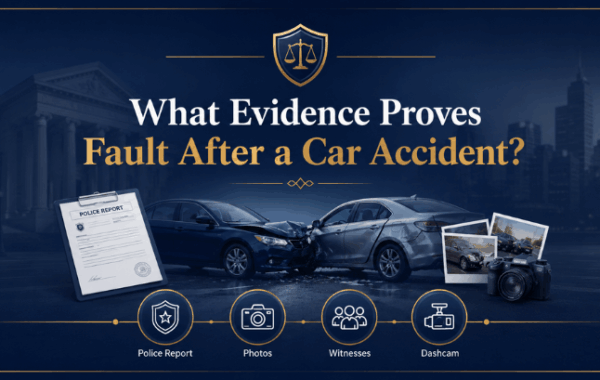
Because more than one party may be involved, gathering the right documentation early can matter. Evidence commonly reviewed in California truck accident cases includes:
- Police accident reports
- Electronic logging device (ELD) data showing driver hours
- Driver qualification files and employment records
- Vehicle maintenance and inspection records
- Cargo loading and weight documentation
- Photos or video from the scene, including dashcam or traffic camera footage
- Witness statements
- Medical records documenting injuries and treatment
Deadlines and Timelines to Keep in Mind
Deadlines in a California truck accident case depend heavily on who is involved and the type of claim being brought.
| Situation | General Deadline / Timeline | Governing Law |
|---|---|---|
| Standard personal injury claim (private parties) | 2 years from the date of the accident | Code of Civil Procedure § 335.1 |
| Claim against a government entity (e.g., road defect) | Administrative claim generally due within 6 months | Government Code § 911.2 |
| Wrongful death claim | 2 years from the date of death | Code of Civil Procedure § 377.60 |
| Claim involving a minor | Generally tolled until the minor turns 18 | Varies by case |
| Evidence preservation (ELD data, maintenance logs) | As soon as possible after the crash | Varies; records may be routinely overwritten |
These timelines are general and may not apply to every situation. Always confirm current deadlines with an attorney or the relevant court or agency.
Mistakes to Avoid After a California Truck Accident
- Assuming only the driver is responsible. Other parties may share liability, and missing one can affect the value of a claim.
- Waiting too long to gather evidence. Electronic logs, maintenance records, and dashcam footage are sometimes overwritten or destroyed.
- Giving a recorded statement to an insurance adjuster before understanding the facts. Statements can be used to argue comparative fault.
- Missing a shorter government claim deadline. Claims against public entities move on a much faster timeline than private claims.
- Accepting an early settlement offer. The full extent of injuries and losses may not be clear right away.
When to Speak With a Qualified Attorney
Because truck accident cases often involve multiple potentially liable parties, overlapping insurance policies, and federal trucking regulations, many injured people choose to speak with an attorney who handles commercial vehicle cases. An attorney can help identify which parties may be responsible, request and preserve time-sensitive evidence, and explain how California’s comparative negligence rule may apply to the specific facts of a case. This is especially important when a government entity may be involved, given the shorter claim deadlines that apply.
Practical Next Steps
- Seek medical attention and keep records of all treatments.
- Document the scene with photos or video if it is safe to do so.
- Obtain the police or Highway Patrol accident report.
- Avoid giving recorded statements to insurance companies before speaking with an attorney.
- Preserve any evidence in your possession, such as photos, witness contact information, or dashcam footage.
- Consult a qualified California attorney to discuss the specific facts of your accident.
Need legal help with a California truck accident?
Figuring out who can be held liable after a California truck accident often takes more investigation than a typical car accident claim. The truck driver, the trucking company, a cargo loader, a parts manufacturer, a maintenance provider, or even a government entity may all play a role depending on what caused the crash. Because California allows fault to be divided among multiple parties under its comparative negligence rule, identifying every responsible party can matter for the outcome of a claim.
If you or a loved one has been injured in a truck accident, the details of the crash, the parties involved, and the applicable deadlines will shape the next steps. Speaking with a qualified California attorney can help clarify how these rules apply to your specific situation, and reviewing related topics such as truck accident vs. car accident claims on US Legal Journal can help you better understand the process before you do.
Common Questions About Truck Accident Liability in California
Can more than one party be liable for the same truck accident?
Yes. California allows fault to be divided among multiple parties, such as a driver, employer, cargo loader, or manufacturer. Each party’s share of responsibility is generally assessed based on the specific facts of the crash, and an injured person may be able to pursue a claim against more than one responsible party at the same time.
Is the trucking company always responsible for a driver’s mistake?
Not always. Vicarious liability generally applies when the driver is an employee acting within the scope of employment. If the driver was an independent contractor with no meaningful company control, liability may work differently. Courts often look at factors such as who controlled the driver’s schedule, route, and vehicle.
What if I was partly at fault for the truck accident?
Under California’s pure comparative negligence rule, you may still be able to recover compensation even if you were partly at fault. Your recovery would generally be reduced by your percentage of responsibility, rather than being barred entirely.
Does it matter what caused the truck to lose control?
Yes. The cause of a crash often points to who may be liable. For example, crashes connected to unbalanced cargo or sudden braking are frequently examined for loading or maintenance failures, which is part of why understanding specific crash mechanics, such as those behind jackknife or rollover events, can matter for identifying responsible parties.
How long do I have to file a claim after a California truck accident?
In most cases involving private parties, California law allows two years from the date of the accident to file a personal injury lawsuit. However, claims involving a government entity generally require a much shorter administrative claim deadline, and other exceptions may apply depending on the facts.
Frequently Asked Questions About California Truck Accident
Do I need a lawyer to file a truck accident claim in California?
You are not legally required to have a lawyer, but truck accident claims often involve multiple insurance companies, federal regulations, and shared liability among several parties, which can make the process more complex than a standard car accident claim.
What is the difference between vicarious liability and direct negligence?
Vicarious liability holds an employer responsible for an employee’s actions performed within the scope of employment. Direct negligence refers to the company’s own failures, such as poor hiring practices or inadequate vehicle maintenance, separate from the driver’s conduct.
Can a truck accident claim involve federal regulations?
Yes. Commercial trucking is regulated in part by the Federal Motor Carrier Safety Administration (FMCSA), and violations of federal rules, such as hours-of-service limits, can be relevant to establishing negligence in a California truck accident claim.
What should I do if I’m not sure who was at fault?
Liability is not always clear right away, especially in multi-vehicle or multi-party truck accidents. Preserving evidence and consulting an attorney early can help clarify how fault may be allocated among the parties involved.
Are truck accident settlements different from car accident settlements?
Under California’s pure comparative negligence rule, you may still be able to recover compensation even if you were partly at fault. Your recovery would generally be reduced by your percentage of responsibility, rather than being barred entirely.
Legal Disclaimer
This article is for general informational purposes only and does not provide legal advice. Laws and procedures may vary by state, city, court, agency, or individual situation. For advice about your specific legal issue, speak with a qualified attorney or the appropriate government agency.