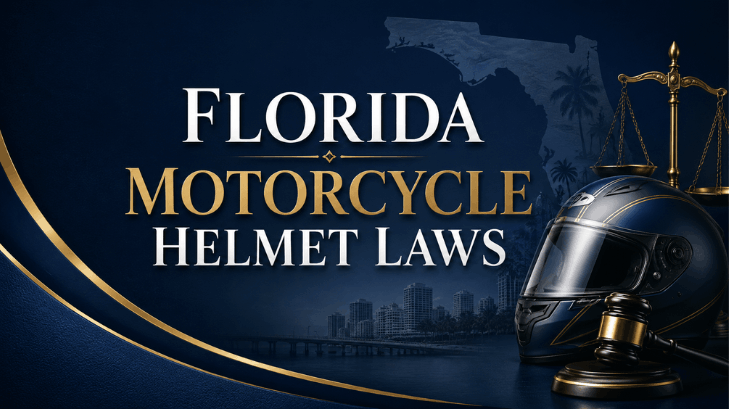
Motorcycle riders in Florida face a legal landscape that’s different from most other states. Florida does not require every rider to wear a helmet, but that flexibility comes with conditions — and after a crash, those conditions can directly affect how an injury claim plays out. If you or someone you love was recently in a motorcycle accident, understanding Florida motorcycle helmet laws is one of the first things that can help you make sense of what comes next.
This confusion is common. Many riders assume that because Florida allows helmet-free riding for some adults, helmet use won’t matter after a crash. In reality, insurance companies often bring it up anyway, especially when a rider suffers a head or facial injury. Knowing how the law actually works — not just what other riders say at the local bike night — can help you avoid mistakes that hurt your claim later.
Below, we break down who legally must wear a helmet in Florida, who is exempt, what happens if you’re hurt while not wearing one, and the practical steps to take after a crash.
Quick Answer
Florida requires motorcycle riders under 21 to wear a DOT-compliant helmet at all times. Riders 21 and older may legally ride without a helmet only if they carry at least $10,000 in motorcycle-specific medical insurance coverage. Even when riding without a helmet is legal, insurers may still argue it contributed to the severity of your injuries under Florida’s comparative negligence rules, which can reduce (but not automatically eliminate) your compensation.
Main Highlights
- Florida’s helmet law is found in Florida Statute § 316.211, and it applies differently depending on age and insurance coverage.
- Riders and passengers under 21 must wear an approved helmet, no exceptions for insurance.
- Riders 21 and older can skip the helmet only if they carry a policy with at least $10,000 in medical benefits for motorcycle crash injuries.
- Motorcycle crashes are not covered by Florida’s no-fault PIP system, so injured riders often rely on bodily injury or uninsured motorist claims.
- Not wearing a helmet does not automatically bar you from recovering compensation, but it can be used to argue comparative fault.
- Florida follows a modified comparative negligence standard, meaning you cannot recover damages if you’re found more than 50% at fault.
What Florida’s Helmet Law Actually Requires
Florida Statute § 316.211 sets the baseline rule: a person may not operate or ride on a motorcycle unless wearing protective headgear that meets Federal Motorcycle Vehicle Safety Standard 218, secured properly on the head. The law also requires eye protection unless the motorcycle has a windshield.
Florida wasn’t always this flexible. Before July 1, 2000, the state required every rider, regardless of age, to wear a helmet. The law changed to allow adult riders more choice, provided they carry adequate insurance to cover their own medical costs if something goes wrong.
Who Must Wear a Helmet
- All riders and passengers under 21 years old must wear an approved helmet at all times, with no exceptions based on insurance.
- Riders under 16 operating a moped or low-speed motorcycle must also wear a helmet, even though older riders on the same type of vehicle may be exempt.
Who Can Legally Ride Without One
A person over 21 may ride without a helmet if they are covered by an insurance policy providing at least $10,000 in medical benefits for injuries from a motorcycle crash. A standard auto insurance policy typically does not satisfy this requirement — riders usually need a dedicated motorcycle policy or endorsement. Officers are generally trained to accept a health insurance card or a declaration page as proof of qualifying coverage during a stop.
Other narrow exemptions apply to:
- Riders operating inside an enclosed cab attached to the motorcycle.
- Riders 16 or older operating a moped or low-speed motorcycle (50cc or less, under 2 brake horsepower, and incapable of exceeding 30 mph).
Why the Helmet Question Matters So Much After a Crash
Even when helmet-free riding is completely legal, that doesn’t mean it’s irrelevant to an injury claim. Florida law does not treat a lack of a helmet as automatic proof of negligence, but insurance adjusters and defense attorneys routinely raise it when a crash involves a head, face, or brain injury.
This is sometimes called the “helmet defense.” The argument insurers make is straightforward: they claim the rider’s injuries would have been less severe, or wouldn’t have happened at all, if a helmet had been worn. Whether that argument holds up depends heavily on the medical evidence, the mechanics of the crash, and how the injuries actually occurred — details that are worked out during settlement negotiations or, if necessary, in court.
Florida’s Comparative Negligence System
Florida uses a modified comparative negligence rule under Florida Statute § 768.81. Under this system:
- Your compensation can be reduced by the percentage of fault assigned to you.
- If a jury or insurer determines that skipping a helmet contributed to the severity of certain injuries, your award for those specific damages may be reduced accordingly.
- If you are found more than 50% at fault for the crash, you are barred from recovering any compensation at all.
This is different from states that follow “pure” comparative negligence, where a rider can recover something even if found mostly at fault. Florida’s rule creates a firmer cutoff, which is one reason riders involved in a crash should be cautious about assumptions and should understand how fault gets calculated before accepting any settlement offer. For a closer look at how insurers and attorneys arrive at a final number, see this breakdown of calculation of personal injury settlements.
Common Scenarios Riders Face After a Crash
Every crash is different, but a few situations come up often for motorcycle riders in Florida:
- A rider over 21 without a helmet is rear-ended at a red light. The other driver is clearly at fault, but the insurer still questions whether a helmet would have reduced the rider’s head injury.
- A rider under 21 is hurt while not wearing a helmet. Because the law required a helmet regardless of insurance, this can create a stronger argument for comparative fault, separate from who caused the initial collision.
- A rider was wearing a helmet but still suffered serious injuries. Helmet use doesn’t eliminate liability questions altogether — issues like lane position, speed, and visibility still matter, similar to disputes seen in proving fault after a car accident.
- A passenger, rather than the operator, was not wearing a helmet. Fault can be evaluated separately for the operator and the passenger depending on the facts.
Evidence That Can Help Support a Motorcycle Injury Claim
| Evidence Type | Why It Matters |
| Police crash report | Documents the officer’s initial assessment, citations issued, and statements from those involved |
| Medical records | Connects specific injuries to the crash and can clarify whether a helmet would have changed the outcome |
| Photos of the scene and motorcycle damage | Helps reconstruct how the collision happened |
| Proof of qualifying medical insurance | Confirms whether a rider over 21 was legally riding without a helmet |
| Witness statements | Can support or dispute the other driver’s account |
| Helmet condition (if worn) | May show whether the helmet met safety standards or failed during impact |
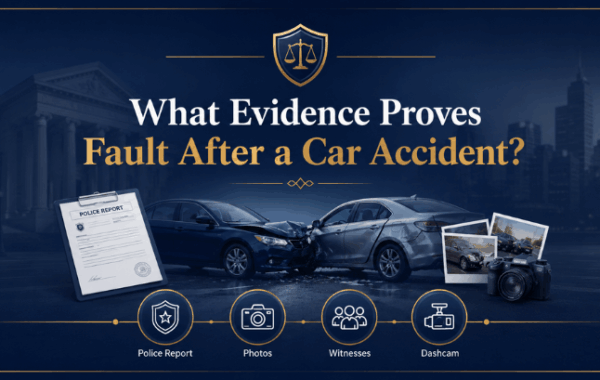
For a broader look at how insurers and attorneys evaluate injury evidence generally, this guide on evidence that proves fault after a crash covers many of the same documentation principles that apply to motorcycle collisions.
Deadlines and Timelines to Know
Florida generally requires injury lawsuits, including those arising from motorcycle crashes, to be filed within two years from the date of the crash under Florida Statute § 95.11, following the 2023 changes to the state’s negligence laws. Missing this window can prevent you from filing a lawsuit at all, regardless of how strong the underlying claim is. Because insurance negotiations can take time, it’s important not to let settlement discussions run past this filing deadline without legal guidance.
Mistakes to Avoid After a Motorcycle Crash
- Assuming a legal helmet exemption means helmet use won’t come up. It often does, especially with head or facial injuries.
- Giving a recorded statement to an insurer before understanding how fault will be assessed.
- Accepting an early settlement offer before knowing the full extent of your injuries or how <a href=”https://uslegaljournal.com/injury/what-damages-can-you-recover-in-personal-injury-case/”>damages are typically calculated</a> in a personal injury case.
- Failing to gather medical documentation early, which can make it harder to counter a helmet-related fault argument later.
- Overlooking common injury patterns. Motorcycle crashes often involve different injury types than standard car accidents; understanding what injuries are common after car accidents can help set expectations for treatment and documentation.
When to Speak With an Attorney
Because Florida’s comparative negligence rule can completely bar recovery once fault crosses 50%, riders involved in a crash — helmeted or not — often benefit from speaking with an attorney before accepting any settlement. This is especially true when:
- The crash involved a head, neck, or facial injury.
- The insurance company has raised the “no helmet” argument.
- Liability is disputed between the rider and another driver.
- Medical treatment is ongoing or the long-term impact of injuries is unclear.
An attorney cannot guarantee a specific outcome, but they can help explain how the comparative negligence rule may apply to your specific facts and what documentation strengthens your position.
Ready to Understand Your Motorcycle Accident Claim?
Understanding Florida’s motorcycle helmet laws can help riders make safer decisions and avoid legal complications after a crash. Practical legal guidance from USLegalJournal can clarify important helmet requirements, insurance considerations, and rider responsibilities before you get back on the road or speak with a qualified Florida motorcycle accident attorney.
People Also Ask
Do you have to wear a helmet on a motorcycle in Florida?
Only if you’re under 21, or if you’re 21 or older and don’t carry at least $10,000 in motorcycle-specific medical insurance. Riders who meet the age and insurance requirements may legally ride without a helmet under Florida Statute § 316.211.
Can I still get compensation if I wasn’t wearing a helmet during a crash?
Yes, in most cases. Not wearing a helmet doesn’t automatically block a claim. However, insurers may argue it contributed to your injury severity, which can reduce your compensation under Florida’s comparative negligence rules.
What insurance is needed to ride without a helmet in Florida?
You generally need a policy providing at least $10,000 in medical benefits specifically for motorcycle crash injuries. Standard auto insurance usually does not qualify on its own.
Does Florida’s no-fault insurance cover motorcycle accidents?
No. Motorcycles are excluded from Florida’s Personal Injury Protection (PIP) system, so injured riders typically pursue compensation through the at-fault driver’s bodily injury coverage or their own uninsured/underinsured motorist coverage.
How long do I have to file a claim after a Florida motorcycle accident?
Generally two years from the date of the crash under Florida Statute § 95.11, though it’s wise to speak with an attorney or the appropriate court as early as possible since facts and evidence can change over time.
FAQs
Is Florida a “no helmet” state?
Not entirely. Florida has a partial helmet law — it requires helmets for riders under 21 and for those 21 or older who lack qualifying medical insurance. It’s not a full helmet-optional state.
What happens if a police officer stops me and I can’t show proof of insurance for riding without a helmet?
This can result in a traffic citation. Requirements for acceptable proof can vary, so it’s best to check with the Florida Department of Highway Safety and Motor Vehicles or a local attorney about current enforcement practices.
Does wearing a helmet guarantee I’ll recover full compensation after a crash?
No. Helmet use is only one factor. Fault, the actions of other drivers, and the nature of your injuries all play a role in how a claim is evaluated.
Can passengers be treated differently than operators under the helmet law?
The helmet requirement itself applies the same way to operators and passengers based on age and insurance status, but fault evaluations after a crash can look at each person’s circumstances separately.
Are moped riders subject to the same helmet rules as motorcycle riders?
Not exactly. Riders 16 or older on qualifying low-speed mopeds are exempt from the helmet requirement, while riders under 16 must wear one regardless of the vehicle type.
Should I talk to my insurance company before speaking with an attorney?
You’re not required to, and it’s often wise to understand your rights first, since statements made early in a claim can sometimes be used later during negotiations.
Legal Disclaimer
This article is for general informational purposes only and does not provide legal advice. Laws and procedures may vary by state, city, court, agency, or individual situation. For advice about your specific legal issue, speak with a qualified attorney or the appropriate government agency.