Starting a limited liability company (LLC) involves more than filing paperwork with the state. One of the most important documents an LLC owner can create is the LLC operating agreement — yet many new business owners aren’t sure what it is, whether it’s required, or what should go inside it.
If you’re forming an LLC, adding a business partner, opening a bank account, or simply trying to protect your personal assets, understanding this document matters. A poorly drafted or missing operating agreement can lead to confusion among members, weakened liability protection, and disputes that are difficult to resolve later.
This article explains what an LLC operating agreement is, who needs one, what it typically includes, and when it makes sense to talk to a business attorney.
Quick Answer
An LLC operating agreement is a written internal document that outlines how a limited liability company will be owned, managed, and operated. It covers ownership percentages, member roles, voting rights, profit distribution, and what happens if a member leaves. Most states don’t require one by law, but California, Delaware, Maine, Missouri, and New York do. Even where it isn’t legally required, having a written operating agreement is widely recommended to protect personal liability status and prevent disputes between members.
Quick Summary
- An LLC operating agreement is an internal contract among LLC members — it is not filed with the state in most cases.
- Five states — California, Delaware, Maine, Missouri, and New York — legally require LLCs to have one.
- Without an operating agreement, your LLC is governed by your state’s default LLC statute, which may not reflect what the owners actually want.
- A good operating agreement covers ownership, management structure, profit and loss allocation, voting, and exit or dissolution procedures.
- Single-member LLCs benefit from having one too, since it helps separate personal and business finances in the eyes of banks and courts.
- Laws and requirements vary by state, so it’s wise to confirm your state’s specific rules or speak with a business attorney.
What Is an LLC Operating Agreement?
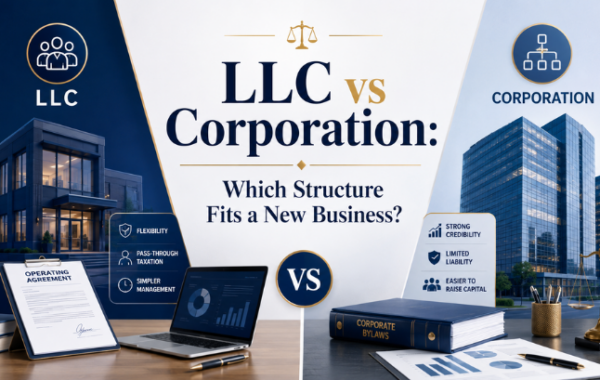
An LLC operating agreement is a written document that explains how a limited liability company will be owned, managed, and operated. It functions similarly to a partnership agreement or corporate bylaws but is specifically tailored to the LLC business structure. For entrepreneurs who are still choosing the right business structure, understanding the role of an operating agreement can also help clarify how an LLC differs from a corporation in areas such as management, ownership rights, taxation, and decision-making authority.
The agreement is generally signed by all LLC members and kept with the company’s internal business records. In most states, it is not submitted to the Secretary of State or any other government agency — it’s a private agreement between the people who own and run the business.
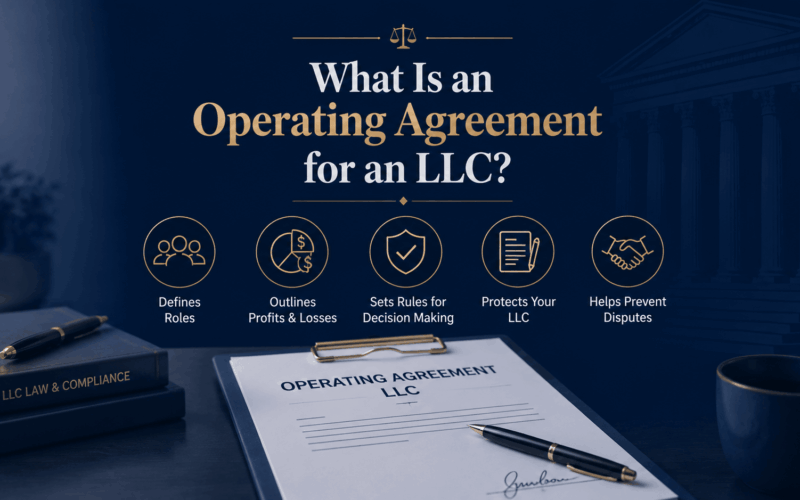
Typical topics addressed in an operating agreement include:
- Each member’s ownership percentage and capital contribution
- Whether the LLC is member-managed or manager-managed
- How profits and losses will be allocated and distributed
- Voting rights and how major business decisions are made
- Procedures for adding or removing members
- What happens if the business is sold, dissolved, or a member passes away
Who Needs an LLC Operating Agreement?
Any LLC—whether it has one owner or several—can benefit from having a clear and comprehensive operating agreement. In addition to defining ownership rights, management responsibilities, voting procedures, and profit distributions, the document can help members reduce misunderstandings and support the goal of avoiding weak business agreements. An LLC operating agreement matters in different ways depending on the company’s ownership structure and circumstances:
Multi-Member LLCs
When more than one person owns an LLC, disagreements about money, responsibilities, or decision-making authority are common. An operating agreement sets expectations in advance, which can prevent costly conflicts between business partners down the road.
Single-Member LLCs
Even with only one owner, an operating agreement helps demonstrate that the LLC is a separate legal entity from the individual. Banks often request one before opening a business account, and courts may look at it when evaluating whether an owner’s personal liability protection should hold up.
Why an Operating Agreement Matters Legally
Without a written operating agreement, an LLC is governed by the default rules in its state’s LLC statute. These default rules are general by design and may not match how the members actually intend to run the business. For example, a state’s default rule might split profits equally among members regardless of how much each person actually invested.
An operating agreement allows the members to override these default state rules and customize the business arrangement to fit their actual agreement. This is one of the main legal reasons attorneys and the U.S. Small Business Administration (SBA) recommend having one, even where it isn’t required by law.
Which States Require an LLC Operating Agreement?
Most states do not legally require LLCs to have a written operating agreement. However, a handful of states do require one, even for single-member LLCs:
| State | Requirement Summary |
|---|---|
| California | Requires LLCs to have an operating agreement; can be written or oral, but a written agreement is strongly encouraged. |
| Delaware | Requires an operating agreement by statute; it does not need to be filed with the state. |
| Maine | Requires an operating agreement to govern the LLC’s internal affairs. |
| Missouri | Requires LLCs to have an agreement covering business conduct and member rights and duties. |
| New York | Requires a written operating agreement, generally adopted within 90 days of formation. |
In all other states, an operating agreement is optional but recommended. Because requirements can change and details vary, it’s a good idea to confirm current rules with your state’s Secretary of State office or a licensed business attorney in your state.
What Happens Without an Operating Agreement?
Business owners sometimes assume that filing Articles of Organization is enough to fully set up an LLC. In practice, that filing creates the entity with the state, but it usually says very little about how the business will actually operate day to day.
Common scenarios that play out when there’s no operating agreement in place include:
- Disagreements between members about who has authority to sign contracts or spend company funds
- Confusion over how profits should be split when contributions were unequal
- Difficulty removing a member who is no longer active in the business
- A bank or lender declining to open an account or extend credit without seeing a governing document
- A court questioning whether the LLC was truly operated as a separate entity, which can affect personal liability protection
Common Mistakes to Avoid
| Mistake | Why It Causes Problems |
|---|---|
| Using a generic template without state-specific review | Default terms may conflict with your state’s LLC statute or your actual business arrangement. |
| Never signing or dating the agreement | An unsigned document may carry less weight if a dispute or audit arises. |
| Leaving out a buyout or exit clause | Without one, a departing member’s exit can become contentious and unclear. |
| Assuming a single-member LLC doesn’t need one | Banks, courts, and investors may still expect to see a written agreement. |
| Not updating the agreement after changes | An outdated agreement may not reflect new members, new ownership splits, or new management roles. |
Documents and Information You’ll Need
Before drafting an operating agreement, it helps to gather the following:
- Your LLC’s Articles of Organization (or Certificate of Formation)
- Each member’s full legal name and address
- Capital contribution amounts from each member
- Agreed-upon ownership percentages
- Management structure decision (member-managed vs. manager-managed)
- Any prior verbal or written agreements between members
When to Speak With a Business Attorney
While templates and online guides can help you understand the basics, certain situations call for professional legal input:
- The LLC has multiple members with unequal contributions or complex profit-sharing arrangements
- The business operates in more than one state
- Members want detailed buy-sell or succession provisions
- There is already a disagreement between members
- The LLC will hold real estate, intellectual property, or significant outside investment
A business attorney can review your draft, confirm it complies with your state’s LLC statute, and help tailor provisions to your specific situation.
Practical Next Steps
- Confirm whether your state legally requires a written operating agreement
- Gather your Articles of Organization and member information
- Draft or review your operating agreement with attention to ownership, management, and exit terms
- Have all members sign and date the final agreement
- Store the signed agreement with your LLC’s permanent business records
- Revisit and update the agreement whenever ownership or management changes
LLC Formation Steps
| Step | What It Means |
|---|---|
| File Articles of Organization | Creates the LLC as a legal entity with the state. |
| Obtain an EIN | Federal tax ID number from the IRS, used for taxes and banking. |
| Draft an Operating Agreement | Internal document outlining ownership, management, and operating rules. |
| Appoint a Registered Agent | A person or service authorized to receive legal and state documents on the LLC’s behalf. |
| Open a Business Bank Account | Separates personal and business finances, supporting liability protection. |
Protect Your Business: Put Your LLC Operating Agreement in Writing
An LLC operating agreement is one of the most important documents a business owner can put in place, even when state law doesn’t require it. It defines how the company will be owned and managed, helps prevent disputes between members, and supports the personal liability protection that makes the LLC structure valuable in the first place.
If you’re forming a new LLC or realize your business has been operating without a written agreement, now is a good time to address it. Review your state’s specific requirements, gather the necessary information about your business and its members, and consider speaking with a qualified business attorney to make sure your operating agreement reflects your actual business arrangement and complies with your state’s laws.
Stay informed about your legal rights with US Legal Journal, a resource for practical articles on accidents, criminal charges, family disputes, business law, and other important legal topics.
People Also Ask
Is an LLC operating agreement legally required?
It depends on the state. California, Delaware, Maine, Missouri, and New York legally require LLCs to have one. Most other states do not require it by law, but having a written agreement is still strongly recommended to protect personal liability status and avoid disputes between members.
Does a single-member LLC need an operating agreement?
Single-member LLCs aren’t always legally required to have one, but it’s still useful. Banks may ask for it before opening a business account, and it helps show that the LLC is operated as a separate entity from its owner, which supports personal liability protection.
Do I file my operating agreement with the state?
Generally, no. In most states, the operating agreement is an internal document kept with the company’s records. It is not submitted to the Secretary of State, unlike the Articles of Organization.
Can I write my own LLC operating agreement?
Many business owners draft their own using templates, especially for simple, single-member LLCs. However, for multi-member LLCs or more complex ownership arrangements, having a business attorney review or draft the agreement can help avoid gaps or conflicts with state law.
What happens if my operating agreement conflicts with my Articles of Organization?
If there’s a conflict, the information in the Articles of Organization filed with the state generally controls. That’s why it’s important to keep both documents consistent, especially regarding member names and ownership details.
rules of evidence. An attorney can advise on how to properly preserve and use this type of footage in your specific case.
Frequently Asked Questions
How much does it cost to create an LLC operating agreement?
Costs vary widely. Some owners use free or low-cost templates, while formation services often charge a modest fee to generate one. Having an attorney draft or review a custom agreement typically costs more but may be worthwhile for complex ownership structures.
Can an operating agreement be changed later?
Yes. Most operating agreements include an amendment process, often requiring a vote among members. Any changes should be documented in writing and signed by the members, following whatever procedure the original agreement specifies.
Is an oral operating agreement valid?
Some states allow oral or implied operating agreements, but this isn’t recommended. Without a written document, it can be difficult to prove what the members actually agreed to if a dispute arises later.
Does an operating agreement protect my personal assets?
An operating agreement alone doesn’t guarantee personal liability protection, but it supports it by showing the LLC operates as a distinct legal entity. Combined with proper financial separation and compliance with state law, it strengthens your liability shield.
What’s the difference between Articles of Organization and an operating agreement?
Articles of Organization are filed with the state to legally create the LLC. The operating agreement is a separate, internal document that explains how the business will actually be run. Most LLCs need both.
This article is for general informational purposes only and does not provide legal advice. Laws and procedures may vary by state, city, court, agency, or individual situation. For advice about your specific legal issue, speak with a qualified attorney or the appropriate government agency.