Many small business owners spend months building a brand name, a logo, a product design, or original content, only to discover that someone else can legally copy it. This is one of the most common and most avoidable problems in business law. Without the right legal protections in place, a competitor can use a similar name, sell a similar product, or even register your brand before you do.
Intellectual property protection for small business is the legal framework that lets owners claim, register, and defend the names, creative works, inventions, and confidential information that make their business unique. Understanding the basics early can help a business avoid costly disputes, rebranding expenses, and lost market opportunities later on.
This article explains what intellectual property protection means for small businesses, the main types available under U.S. law, how the registration process generally works, and when it makes sense to speak with an intellectual property attorney.
Quick Answer
Intellectual property protection for small business refers to the legal tools, mainly trademarks, copyrights, patents, and trade secrets, that protect a company’s brand name, original content, inventions, and confidential business information. Most small businesses start with a trademark for their name or logo and a copyright for original creative content. Registration with a federal agency, such as the USPTO or the U.S. Copyright Office, generally provides stronger and broader legal rights than relying on common-law protection alone. Because eligibility, costs, and procedures can be detailed and fact-specific, consulting a licensed attorney before filing is recommended.
Main Highlights
- Small business IP protection generally falls into four categories: trademarks, copyrights, patents, and trade secrets.
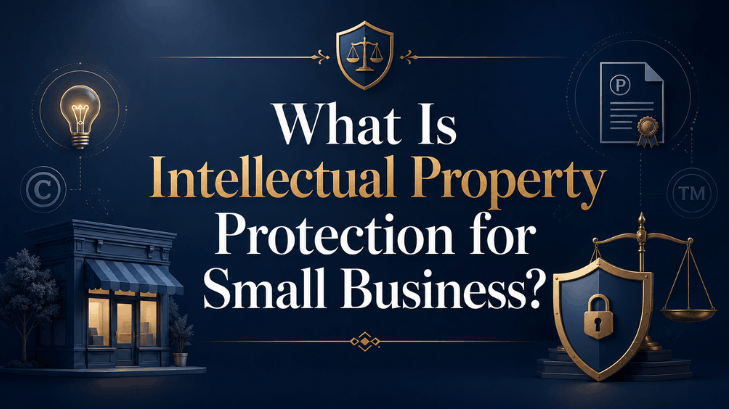
- Trademarks protect brand names, logos, and slogans; copyrights protect original creative works; patents protect inventions; trade secrets protect confidential business information.
- Federal registration with the USPTO or U.S. Copyright Office can provide stronger nationwide rights than relying on use alone, though basic common-law trademark rights may exist without registration.
- Filing fees, timelines, and eligibility rules differ by IP type and can change, so checking current information on USPTO.gov and Copyright.gov is important before filing.
- Choosing the right business structure, such as an LLC, can also affect how a business owns and protects its intellectual property.
- An intellectual property attorney can help evaluate which protections fit a specific business and respond to legal issues such as office actions or infringement disputes.
What Does Intellectual Property Protection Mean?
Intellectual property (IP) refers to creations of the mind that have commercial value, such as a business name, a product design, written content, software, or a unique manufacturing process. IP protection is the set of legal rights that allows the creator or business owner to control how that asset is used, copied, or sold by others.
For a small business, intellectual property protection for small business often starts with the basics: the company name, the logo, the website content, and any unique product features. As a business grows, it may need to consider patents for inventions or formal agreements to protect trade secrets shared with employees and contractors.
Who Needs Small Business IP Protection?
Most businesses that interact with customers, create original content, or develop unique products can benefit from some level of IP protection. This is not limited to large corporations or tech startups.
- Retail and e-commerce businesses with a brand name, logo, or product packaging design
- Restaurants, salons, and local service businesses building a recognizable brand
- Software developers, app creators, and online content creators
- Manufacturers or inventors with a new product, process, or design
- Consultants, agencies, or course creators with original written or video content
- Any business sharing confidential pricing, client lists, or processes with employees or vendors
The Four Main Types of Intellectual Property Protection
Federal law in the United States recognizes several distinct categories of intellectual property. Each one protects a different kind of business asset and follows its own registration process.
1. Trademarks: Protecting Brand Identity
A trademark protects a word, phrase, logo, symbol, or design that identifies the source of a business’s goods or services and distinguishes them from competitors. This is usually the first type of protection a small business considers, since the business name and logo are often its most visible assets.
Trademark rights can exist simply through use of a mark in commerce, sometimes called common-law rights, but these rights are generally limited to the geographic area where the business actually operates. Federal registration through the United States Patent and Trademark Office (USPTO) can provide nationwide protection, the right to use the registered trademark symbol, and the ability to enforce rights in federal court.
Before filing, the USPTO recommends searching its trademark database and the broader web to check whether a similar mark is already in use, since a mark that is confusingly similar to an existing registered trademark is typically refused.
2. Copyrights: Protecting Original Creative Work
Copyright protects original works of authorship, such as written content, photographs, videos, software code, music, and graphic designs, as soon as the work is created and fixed in a tangible form. Unlike trademarks, copyright protection generally exists automatically once a qualifying work is created, without needing to register it.
However, registering a copyright with the U.S. Copyright Office provides important legal advantages, including the ability to file an infringement lawsuit in federal court and, in many cases, the option to seek statutory damages and attorney’s fees if registration occurred before the infringement began or within certain statutory deadlines.
3. Patents: Protecting Inventions
A patent protects a new and useful invention, process, or design, giving the owner the right to prevent others from making, using, or selling it without permission for a limited period. Patents are generally the most technical and expensive type of intellectual property protection, often requiring a patent attorney or registered patent agent due to the complexity of the application process.
Small businesses with a genuinely new product, manufacturing process, or technical design may need to consult a patent attorney early, since publicly disclosing or selling an invention before filing can affect eligibility under U.S. patent law.
4. Trade Secrets: Protecting Confidential Business Information
A trade secret is confidential business information that provides a competitive advantage because it is not generally known or easily discovered by others. Examples include customer lists, pricing formulas, recipes, marketing strategies, and internal processes.
Unlike trademarks, copyrights, and patents, trade secrets are not registered with a government agency. Instead, protection depends on the business taking reasonable steps to keep the information confidential, such as using non-disclosure agreements (NDAs), restricting access, and limiting what is shared with employees, contractors, or vendors.
How the Trademark Registration Process Generally Works
While procedures and fees can change, the general federal trademark process typically follows these stages:
- Conduct a clearance search of the USPTO’s trademark database and general web sources to check for conflicting marks
- Choose the correct filing basis (use in commerce or intent to use) and the appropriate trademark class for the goods or services
- File the application through the USPTO’s online filing system, which requires identity verification
- Wait for assignment to and review by a USPTO examining attorney
- Respond to any office action, which is a formal letter raising questions or objections, usually within three months of issuance
- If approved, the mark is published for opposition, giving others a window to challenge the registration
- If no successful opposition is filed, the USPTO issues a registration certificate
Processing times and filing fees change periodically and depend on USPTO workload, the filing basis selected, and how many classes of goods or services are involved. Readers should always confirm current fees and timelines directly on USPTO.gov before filing, since this article does not guarantee any specific cost, timeline, or approval outcome.
Documents and Information Typically Needed
- Legal business name and entity type (sole proprietorship, LLC, corporation, etc.)
- A clear image or description of the logo, name, or design to be protected
- A description of the specific goods or services connected to the trademark
- Proof of use in commerce, such as product packaging, website screenshots, or labels (if filing based on current use)
- Copies or files of original creative works for copyright registration
- Internal policies or agreements, such as NDAs, for protecting trade secrets
Common Examples Small Business Owners Encounter
Many small business owners do not think about intellectual property until a problem arises. Typical situations include:
- Discovering a competitor using a very similar business name or logo in the same industry
- Receiving a cease-and-desist letter claiming a current business name infringes on someone else’s registered trademark
- Finding website content, product photos, or blog posts copied without permission
- A former employee or contractor using confidential client information after leaving the company
- Wanting to license a product design or written content to another company
Mistakes to Avoid
- Assuming a registered business name or domain name automatically creates trademark rights
- Skipping a trademark search before adopting a new brand name or logo
- Waiting too long to file, since U.S. trademark rights are generally based on priority of use and filing
- Sharing confidential information with employees or vendors without a written confidentiality agreement
- Publicly disclosing or selling an invention before exploring patent protection
- Assuming informal online registration services provide the same legal protection as proper attorney guidance for complex filings
IP Protection Type Comparison
The table below summarizes the main differences between the four core types of intellectual property protection for small business.
| IP Type | What It Protects | Registers With | Approx. Duration |
| Trademark | Brand names, logos, slogans | USPTO (federal); states also register | Can last indefinitely with renewal and continued use |
| Copyright | Original creative works (text, images, code, video) | U.S. Copyright Office | Generally life of the author plus 70 years (varies by work type) |
| Patent | New inventions, processes, designs | USPTO | Generally up to 20 years for utility patents (varies by patent type) |
| Trade Secret | Confidential business information | Not registered; protected by confidentiality measures | Indefinite, as long as secrecy is maintained |
Note: Duration rules are general and can vary based on the specific type of work, filing date, and applicable law. Confirm current rules on USPTO.gov and Copyright.gov.
Should a Small Business Use an LLC or Corporation to Hold IP Rights?
Business structure can affect how intellectual property is owned, licensed, and protected. Some small business owners choose to register trademarks or hold IP rights under their business entity, such as an LLC or corporation, rather than as an individual. This can affect liability, transferability, and how the business is valued if it is later sold.
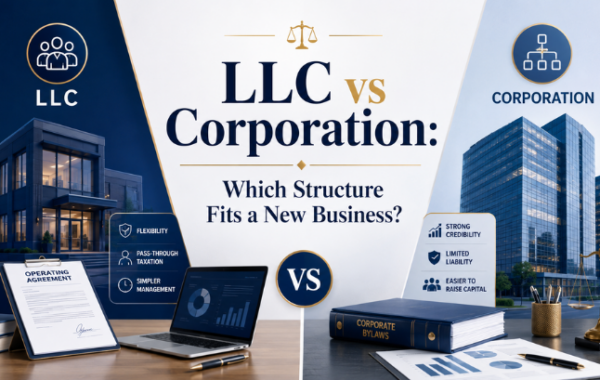
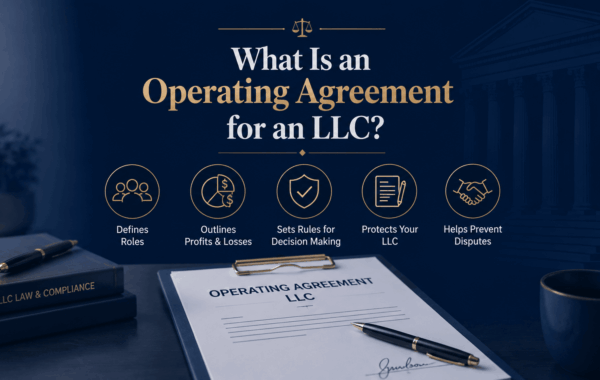
Understanding how an LLC operates internally is also useful here, since an operating agreement can address how the business handles assets like intellectual property among multiple members. For more on this topic, see our guide on what is an operating agreement for an LLC. Business owners deciding between entity types may also find it helpful to review the differences explained in LLC vs corporation.
When to Speak With an Intellectual Property Attorney
While many small business owners begin researching IP protection on their own, certain situations typically call for professional legal guidance:
- Before filing a trademark application, especially if a similar mark already exists
- After receiving a cease-and-desist letter or notice of trademark opposition
- Before filing a patent application for a new invention or design
- When drafting licensing agreements, NDAs, or IP assignment clauses
- If a former employee, contractor, or competitor may be misusing confidential information
- When buying, selling, or transferring IP rights as part of a business sale
Practical Next Steps for Small Business Owners
- Identify which business assets need protection: brand name, logo, content, product design, or confidential information
- Search the USPTO trademark database before adopting or filing a new brand name
- Decide which IP protections are realistic for your budget and business stage
- Put written confidentiality agreements in place with employees, contractors, and vendors
- Review your business structure, such as an LLC operating agreement, to clarify IP ownership among multiple owners
- Consult a licensed intellectual property attorney before filing complex applications or responding to legal disputes
Protect Your Brand Early: Start Your Small Business IP Strategy Today
Intellectual property protection for small business is not just a legal formality, it is a practical tool that helps protect the name, content, inventions, and confidential information that make a business valuable. Understanding the differences between trademarks, copyrights, patents, and trade secrets allows owners to make informed decisions before a dispute or rebranding issue forces their hand.
Whether a business is just starting out or growing into new markets, taking time to evaluate small business IP protection options, and reviewing related issues like business structure and operating agreements, can prevent costly problems later. For guidance specific to your situation, consider speaking with a licensed intellectual property attorney or reviewing official resources on USPTO.gov and Copyright.gov.
People Also Ask
Do I need a trademark for my small business name?
Not every business legally requires a registered trademark, but registering one can provide stronger, nationwide protection for your brand name or logo. Without registration, your rights may be limited to the specific geographic area where you operate. A trademark attorney can help evaluate whether registration makes sense for your situation.
Is copyright protection automatic for small business content?
Yes, copyright protection generally applies automatically once an original work, such as website content or marketing materials, is created. However, registering the work with the U.S. Copyright Office provides additional legal advantages, including the ability to sue for infringement in federal court and pursue certain statutory damages.
How much does it cost to trademark a business name?
USPTO filing fees and any attorney or service fees can vary depending on the filing basis and number of trademark classes selected. Fees and processing times change periodically, so it is best to confirm current costs directly on USPTO.gov before filing, rather than relying on outdated estimates.
Can I protect my business idea without a patent?
A general business idea typically cannot be patented; only specific inventions, processes, or designs may qualify. For ideas that involve confidential methods or information rather than a patentable invention, trade secret protection through confidentiality agreements may be more appropriate.
What happens if someone copies my small business logo?
If your logo is registered as a trademark, you may have legal options to address unauthorized use, including sending a cease-and-desist letter or pursuing legal action. Without registration, your options may be more limited. An attorney can review the specific facts and advise on next steps.
Frequently Asked Questions
Can a sole proprietor register a trademark?
Yes. Any individual or business entity, including a sole proprietor, can file a federal trademark application with the USPTO, as long as the legal requirements for registrability are met.
How long does small business IP protection last?
Duration depends on the type of protection. Trademarks can potentially last indefinitely with proper renewal and continued use, copyrights typically last for decades after creation, and patents generally have a fixed term, often up to 20 years for utility patents. Specific durations can vary based on the type of work and applicable law.
Does forming an LLC automatically protect my business name as a trademark?
No. Registering an LLC with a state typically protects the business name only within that state for entity purposes and does not provide trademark rights. Trademark protection generally requires a separate federal or state trademark filing.
What is the difference between a trademark and a copyright?
A trademark protects brand identifiers like names, logos, and slogans that distinguish a business in the marketplace. A copyright protects original creative works, such as written content, images, or software. Many small businesses need both types of protection for different assets.
Where can I check if a business name is already trademarked?
The USPTO maintains a public trademark database that allows users to search existing federal trademark applications and registrations. It is generally recommended to search this database, along with broader web and state-level business name searches, before adopting a new brand name.
Should I consult a lawyer before filing for IP protection?
While some filings can be completed without an attorney, intellectual property law can be technical and fact-specific. Consulting a licensed attorney is especially recommended for trademark conflicts, patent applications, licensing agreements, or any active legal dispute.
Legal Disclaimer
This article is for general informational purposes only and does not provide legal advice. Laws and procedures may vary by state, city, court, agency, or individual situation. For advice about your specific legal issue, speak with a qualified attorney or the appropriate government agency.