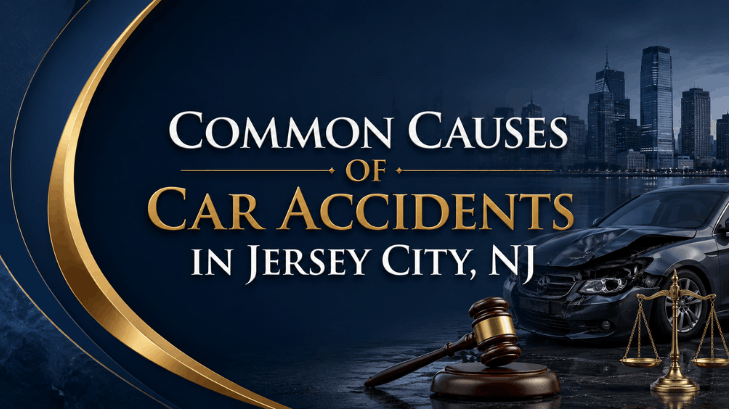
If you have ever driven through Jersey City during rush hour, you already know the roads can feel unpredictable. Between the traffic heading toward the Holland Tunnel, the busy intersections downtown, and the constant flow of commuters, delivery vehicles, and pedestrians, crashes happen often. Many people who search for information about a recent accident want to understand why it happened before they figure out what to do next.
Knowing the common causes of car accidents in Jersey City can help you understand how these crashes typically unfold and what factors are often involved. It can also help you recognize what information may matter later, whether that means talking to an insurance adjuster, a police officer, or an attorney.
This article breaks down the most frequent causes of crashes in Jersey City, what drivers commonly experience after a wreck, and practical next steps to consider. It is written for general information only and does not replace advice from a licensed New Jersey attorney.
Quick Answer
Most car accidents in Jersey City are caused by distracted driving, speeding, failure to yield at intersections, tailgating, and poor weather conditions. Heavy congestion near the Holland Tunnel, the New Jersey Turnpike extension, and downtown intersections makes rear-end collisions and turning accidents especially common. Fault often depends on the specific facts of the crash, so laws and outcomes vary by situation and it is best to speak with a qualified New Jersey attorney about your case.
Main Highlights
- Distracted driving, speeding, and failure to yield are among the most frequently reported causes of crashes across New Jersey, including Jersey City.
- Jersey City’s dense downtown, tunnel-bound commuter routes, and busy intersections see a high number of rear-end and turning-related crashes.
- New Jersey follows a modified comparative negligence rule, meaning more than one driver can share fault for the same crash.
- Documenting the scene, seeking medical attention, and gathering information quickly can matter if you later file an insurance claim.
- Weather, road construction, and reduced visibility add extra risk during certain seasons and times of day.
- Every accident is different, so specific legal rules and outcomes should be discussed with a licensed attorney or the appropriate agency.
Why Car Accidents Are So Common in Jersey City
Jersey City is one of the most densely populated cities in New Jersey, and its location across the Hudson River from Manhattan means it carries a large volume of commuter and commercial traffic every day. Drivers heading toward the Holland Tunnel, the New Jersey Turnpike, or Route 1 & 9 often pass through crowded local streets, which increases the chance of sudden stops, merging conflicts, and intersection crashes.
According to New Jersey Department of Transportation crash data, the state records hundreds of thousands of motor vehicle crashes each year, and cities with heavy commuter traffic, including Jersey City, are consistently among the areas with the highest number of reported accidents. These figures shift from year to year, so current statistics should always be confirmed directly with NJDOT or NJ State Police reports.
Most Common Causes of Car Accidents in Jersey City
Distracted Driving
Distracted driving is consistently reported as one of the leading causes of car accidents in New Jersey. This includes texting, talking on the phone, adjusting navigation apps, eating, or even reaching for something inside the vehicle. In a city like Jersey City, where drivers must react quickly to pedestrians, cyclists, and sudden stops, even a few seconds of distraction can lead to a collision.
Speeding and Aggressive Driving
Speeding remains a major factor in crashes throughout New Jersey. Drivers who exceed posted limits or drive aggressively through yellow lights have less time to react to traffic ahead. On roads like Route 440 or the busy stretches near Journal Square, speeding combined with heavy traffic volume increases both the likelihood and severity of a crash.
Failure to Yield and Unsafe Lane Changes
Jersey City has many multi-lane intersections, one-way streets, and merge points near highway entrances. Drivers who fail to yield the right of way, or who change lanes without checking blind spots, are a common cause of T-bone and sideswipe collisions, especially during rush hour when traffic is moving in tight, overlapping patterns.
Following Too Closely (Tailgating)
Rear-end collisions are one of the most frequently reported crash types in New Jersey, and tailgating is a leading contributor. Heavy stop-and-go traffic near downtown Jersey City and the tunnel approaches gives drivers very little room for error if the vehicle ahead brakes suddenly.
Driving Under the Influence
Alcohol and drug-impaired driving continues to play a role in a meaningful share of New Jersey crashes, including serious and fatal ones. Impairment slows reaction time and judgment, which can turn an otherwise avoidable situation, like a pedestrian crossing or a sudden lane change, into a serious collision.
Poor Weather and Road Conditions
Rain, snow, ice, and fog reduce visibility and traction, and Jersey City’s older streets and frequent construction zones can make wet or icy pavement even more hazardous. Weather-related crashes tend to increase during the winter months and during sudden downpours in warmer seasons.
Driver Fatigue
Fatigued driving is harder to measure than other causes, but it is widely recognized as a contributing factor in crashes, particularly among commuters, rideshare and delivery drivers, and people driving long shifts. A tired driver reacts more slowly and may have trouble staying in their lane or judging the following distance.
Pedestrian and Cyclist-Related Crashes
Jersey City’s walkable downtown and growing network of bike lanes mean drivers regularly share the road with pedestrians and cyclists. Crashes involving pedestrians or cyclists often happen at crosswalks, near bus stops, or when a driver is turning and fails to check for people already in the intersection.
Cause, Crash Type, and Common Scenario
| Common Cause | Typical Crash Type | Common Scenario |
|---|---|---|
| Distracted driving | Rear-end collision | Driver looks at phone and fails to stop in traffic |
| Speeding | Intersection or highway crash | Driver cannot stop in time at a light or curve |
| Failure to yield | T-bone or sideswipe | Driver turns or merges without checking cross traffic |
| Tailgating | Rear-end collision | Vehicle ahead brakes suddenly in stop-and-go traffic |
| Impaired driving | Single or multi-vehicle crash | Slowed reaction time leads to a missed stop or swerve |
| Poor weather | Skidding or multi-car pileup | Wet or icy roads reduce traction and stopping distance |
| Pedestrian right-of-way errors | Pedestrian or cyclist crash | Driver turns without checking crosswalk |
Establishing Fault After a Jersey City Car Accident
New Jersey follows a modified comparative negligence rule, which means more than one driver can be found partly responsible for a crash. Depending on how much fault each driver holds, this can affect what a person is able to recover. Readers who want more detail on how shared responsibility works can review this explanation of the partly at fault after a car accident, which covers how percentages of fault are generally assessed in New Jersey.
Fault is not always obvious right away. Police reports, witness statements, traffic camera footage, and vehicle damage patterns are often reviewed together before anyone determines how a crash actually happened. Because the process can be detailed, it helps to understand what evidence that helps prove fault after a car accident typically looks like before speaking with an insurer or attorney.
Evidence That Can Matter After a Crash
The specific facts of a Jersey City accident, such as traffic signal timing, road markings, weather at the time, and any available video, can all play a role in how a claim is evaluated. Photos of the vehicles, the intersection, and any visible injuries, along with contact information for witnesses, are commonly cited as useful early steps. A closer look at evidence that proves fault after a car crash can help readers understand what details tend to matter most when a claim is reviewed.
Common Injuries and What Happens Next
Car accidents in Jersey City range from minor fender benders to more serious collisions involving injury. Some of the most frequently reported injuries include whiplash, back and neck strain, concussions, and broken bones, particularly in rear-end and intersection crashes. A general overview of common injuries after car accident situations can help readers understand what symptoms are often reported and why prompt medical evaluation is generally recommended, even when injuries do not seem severe at first.
If a claim moves forward, it often involves back-and-forth discussion with an insurance company about what happened and what the losses are worth. Readers who want to understand that process in more detail can review how personal injury settlement negotiations typically unfold, including the kinds of documentation and back-and-forth that are common before a resolution is reached.
Mistakes to Avoid After a Car Accident
- Leaving the scene before exchanging information or contacting police, even in a minor crash.
- Skipping a medical evaluation because injuries are not immediately obvious.
- Giving a recorded statement to an insurance company before understanding the full picture of what happened.
- Failing to document the scene with photos, witness names, or a copy of the police report.
- Assuming fault or accepting blame at the scene before all facts have been reviewed.
- Waiting too long to report the crash to an insurer, which can affect how a claim is handled.
When to Speak With an Attorney
Not every fender bender requires a lawyer, but certain situations are worth a consultation, including crashes involving injuries, disputed fault, uninsured or underinsured drivers, or an insurance company that denies or undervalues a claim. An attorney licensed in New Jersey can review the specific facts of a crash and explain the options available under state law.
Practical Next Steps After a Crash in Jersey City
- Move to a safe location if possible and call 911 to report the accident.
- Exchange names, insurance information, and license plate numbers with the other driver.
- Take photos of the vehicles, license plates, road conditions, and any visible injuries.
- Get contact information from any witnesses at the scene.
- Seek medical attention, even if injuries seem minor at first.
- Keep records of medical visits, repair estimates, and any communication with insurers.
- Consider speaking with a licensed New Jersey attorney before accepting a settlement offer.
Want to Better Understand Your Car Accident Situation?
Every car accident is different, and the details of what happened, the road conditions, the drivers involved, and the evidence available can all shape what happens next. If you are trying to understand a recent crash in Jersey City, US Legal Journal publishes informative articles covering car accidents, fault, injuries, and the claims process to help readers get a clearer picture before speaking with a qualified attorney or insurance representative.
People Also Ask
What is the most common cause of car accidents in New Jersey?
Distracted driving is consistently reported as one of the leading causes of car accidents across New Jersey, including Jersey City. Speeding and failure to yield are also frequently cited factors. The exact leading cause can vary by year and by the specific data source, so current NJDOT or NHTSA reports offer the most up-to-date figures.
Who is at fault in a rear-end collision in Jersey City?
In many rear-end crashes, the following driver is presumed to bear some responsibility for not maintaining a safe distance. However, fault can be shared if the lead driver stopped suddenly without reason or had malfunctioning brake lights. Every case depends on its specific facts and evidence.
Does weather affect fault in a car accident?
Weather itself does not excuse a driver from the duty to drive safely for existing conditions. A driver who fails to slow down or adjust for rain, snow, or ice can still be found at fault, even though the weather contributed to the crash.
Can two drivers share fault in New Jersey?
Yes. New Jersey uses a modified comparative negligence system, which allows fault to be divided between drivers based on their share of responsibility for the crash. This can affect how much a person is able to recover, depending on their percentage of fault.
How long do I have to file a car accident claim in NJ?
New Jersey has specific filing deadlines for personal injury and insurance claims, and these timeframes can vary depending on the type of claim and insurance policy involved. Because deadlines are strict and case-specific, it is best to confirm current timeframes with a licensed New Jersey attorney or the relevant insurance policy.
Frequently Asked Questions About Common causes of car accident in Jersey City
Do I need a police report after a minor accident in Jersey City?
A police report is generally recommended even for minor crashes, since it creates an official record of the incident. Some insurers require it before processing a claim, and it can help establish basic facts if a dispute arises later.
What if the other driver doesn’t have insurance?
New Jersey drivers are required to carry auto insurance, but uninsured drivers still exist. If you carry uninsured motorist coverage, it may apply in this situation. An attorney or your insurance company can explain what options are available based on your specific policy.
Can I still recover damages if I was partly at fault?
It may still be possible to recover damages even if you share some responsibility for a crash, depending on your percentage of fault under New Jersey’s comparative negligence rules. The specific outcome depends on the facts of the case.
How does New Jersey’s no-fault insurance system work?
New Jersey is a no-fault insurance state for certain claims, meaning your own Personal Injury Protection (PIP) coverage typically pays initial medical bills regardless of who caused the crash. Depending on the severity of the injury, a person may still be able to pursue a claim against the at-fault driver.
Should I talk to the other driver’s insurance company?
It is generally recommended to be cautious before giving a recorded statement to another driver’s insurance company, since statements made early on can be used later when evaluating the claim. Many people choose to consult an attorney before speaking with an insurer.
Legal Disclaimer
This article is for general informational purposes only and does not provide legal advice. Laws and procedures may vary by state, city, court, agency, or individual situation. For advice about your specific legal issue, speak with a qualified attorney or the appropriate government agency.