You just bought a used car, and within weeks the check-engine light is back on, the transmission is slipping, or the same electrical problem keeps returning no matter how many times the shop says it fixed the issue. Naturally, you start asking: does lemon law apply to used cars, or does that protection only exist for brand-new vehicles?
The honest answer is that it depends. Lemon laws were originally written mainly with new-car buyers in mind, but several states provide at least some protection for used vehicles. Some states have dedicated used-car lemon laws. Others may protect used vehicles only in limited situations, such as when the vehicle is still within a qualifying warranty period or was sold with a written dealer warranty. In states without used-car lemon law coverage, buyers may still have options under consumer protection statutes, implied warranty rules, dealer disclosure laws, or federal warranty law.
This article explains when used-car lemon law protections may apply, how warranty status affects your rights, what evidence you should keep, and when it makes sense to speak with a qualified attorney about your situation.
Quick Answer
Lemon laws can apply to used cars, but coverage is much less consistent than it is for new vehicles. Some states, including New York and Massachusetts, have specific used-car protections. Maryland may cover a later owner only if the vehicle is still within the law’s age and mileage limits. Other states focus primarily on new or leased vehicles and leave used-car buyers to rely on warranty law, dealer disclosure rules, fraud claims, or general consumer protection laws.
Warranty status is often critical. A used car sold with a written dealer warranty, a certified pre-owned warranty, or another qualifying warranty may give the buyer more options than an as-is sale. However, a remaining manufacturer warranty does not automatically create full lemon law rights in every state. For example, after the California Supreme Court’s 2024 Rodriguez v. FCA decision, a used vehicle purchased with only the unexpired balance of the original manufacturer’s warranty may not qualify for California’s Song-Beverly refund-or-replacement remedy unless the new-car warranty was issued with that sale.
Quick Summary
- Coverage varies by state. Some states have dedicated used-car lemon laws; others mainly cover new or leased vehicles.
- Warranty status matters. Used-car protection often depends on whether the vehicle was sold with a written warranty, dealer warranty, manufacturer-backed certified pre-owned warranty, or other qualifying coverage.
- As-is sales limit options. If you bought a used car strictly as is, lemon law and warranty remedies may be limited, though fraud and disclosure-based claims may still exist.
- Federal and state laws may still help. The FTC Used Car Rule, state consumer protection laws, implied warranty rules, and the Magnuson-Moss Warranty Act can matter even when a state lemon law does not apply.
- Documentation is essential. Repair orders, written warranties, the Buyers Guide, written complaints, and mileage records can make or break a claim.
- Deadlines vary. State lemon law, warranty, arbitration, and court deadlines can be short, so do not wait too long to review your options.
What Does “Lemon Law” Actually Mean?
Social Security Disability Insurance (SSDI) is often described as an earned benefit. It works like an insurance policy that you pay into through Social Security taxes (FICA) deducted from your paycheck. If a qualifying disability later prevents you from woA lemon law is a consumer protection law that gives vehicle buyers a potential remedy when a vehicle has a substantial defect that cannot be fixed after a reasonable number of repair attempts. If the vehicle qualifies as a lemon, the manufacturer, dealer, or warrantor may have to repair the defect, replace the vehicle, or refund the purchase price, depending on the law that applies.
Every state has some form of lemon law, but the details differ significantly. Many state lemon laws were written primarily for new vehicle purchases and leases. That is why used-car coverage depends heavily on the state, the vehicle’s age and mileage, the seller, and the warranty documents involved in the sale.
Does Lemon Law Apply to Used Cars?
Yes, in some states and under certain conditions, lemon law can apply to used cars. The strongest used-car claims often involve one of these situations:
- The state has a dedicated used-car lemon law.
- The dealer was legally required to provide a short written warranty.
- The vehicle was sold as certified pre-owned with manufacturer-backed warranty coverage.
- The vehicle is still within a qualifying state lemon law period based on age, mileage, or original delivery date.
- The seller misrepresented the vehicle’s warranty status, condition, accident history, odometer reading, or title history.
Why New Cars Are Treated Differently
New car lemon laws assume the buyer is purchasing a vehicle with a full factory warranty and little or no prior use. Because of that, many state laws set clearer standards for new vehicles, such as a defined number of repair attempts, a specific number of days out of service, and a time or mileage window after purchase.
Used cars are more complicated. A used vehicle may have prior owners, unknown maintenance history, accident history, expired warranty coverage, or a short remaining warranty term. Those facts make state rules more varied and make documentation especially important.
State Examples: Used Car Lemon Law Protections
The table below gives examples of how several states approach used-car issues. It is not a complete 50-state chart and should not be treated as legal advice. Always confirm the current rule with the state attorney general, consumer protection office, motor vehicle agency, or a qualified attorney before taking legal action.
| State | Used-Car Approach | Typical Key Conditions or Cautions |
| New York | Dedicated Used Car Lemon Law requiring dealers to provide written warranties on qualifying used vehicles. | Vehicle must be bought, leased, or transferred after 18,000 miles or two years from original delivery, whichever came first; purchased from a New York dealer; price or lease value at least $1,500; fewer than 100,000 miles at purchase or lease; primarily personal use. Warranty length depends on mileage. |
| California | Used-car lemon law coverage is limited and fact-specific after Rodriguez v. FCA. | Do not assume a remaining manufacturer warranty alone qualifies the vehicle for Song-Beverly refund-or-replacement remedies. A used vehicle with only the unexpired balance of the original manufacturer’s new-car warranty may not qualify unless the new-car warranty was issued with that sale. Other warranty or contract remedies may still be possible. |
| Massachusetts | Massachusetts has used-vehicle warranty protections under its lemon law framework. | Coverage depends on mileage, sale price, seller type, and timing. State-backed warranty protection may apply for a limited period after purchase, and buyers should review the Massachusetts Used Vehicle Warranty Law rules. |
| Maryland | Maryland is not a broad used-car lemon law state, but later owners may qualify in limited situations. | The vehicle must be registered in Maryland and fall within the law’s age and mileage limits. Maryland’s official guidance says the law applies to vehicles less than 24 months old and driven fewer than 18,000 miles; a later owner may qualify if the original owner bought the vehicle less than 24 months ago. |
| Maine | Maine does not provide a standard used-car lemon law like New York, but it has dealer disclosure and inspection-related protections. | If a dealer complies with the Used Car Information Act, gives no express warranty, and properly disclaims implied warranties, an as-is buyer may mainly have the warranty that the vehicle can pass state inspection, plus possible remedies for misrepresentation or disclosure violations. |
| New Mexico | New Mexico requires short implied warranty protection for used cars sold by licensed dealers. | Licensed used motor vehicle dealers generally must provide at least 15 days or 500 miles of warranty protection, whichever comes first. New Mexico guidance also states there are no as-is used-car sales at licensed dealers except for properly disclosed and waived specific defects. |
| Other states | Many states focus lemon law remedies mainly on new or leased vehicles. | Used-car buyers may need to rely on written warranties, implied warranties, FTC Buyers Guide disclosures, fraud claims, or general consumer protection laws instead of a dedicated used-car lemon law. |
What If Your State’s Lemon Law Doesn’t Cover Used Cars?
If your state’s lemon law does not extend to your used vehicle, you may still have options. The right path depends on how the car was sold, what the documents say, and whether the dealer or seller made misleading statements.
The Federal Used Car Rule
The Federal Trade Commission’s Used Car Rule requires most dealers who sell or offer for sale more than five used vehicles in a 12-month period to display a Buyers Guide on every used car offered for sale. The Buyers Guide explains whether the car is sold with a warranty or as is. If a warranty applies, the Guide must describe the basic terms, including what percentage of repair costs the dealer will pay and which systems are covered.
The FTC rule applies in every state except Maine and Wisconsin, which have comparable disclosure rules. If a dealer failed to display the Buyers Guide, failed to give you the final Buyers Guide at the sale, or used a contract that contradicts the Guide, that may support a complaint with the FTC, your state attorney general, or another consumer protection agency.
State Consumer Protection Laws
Most states have laws against unfair or deceptive trade practices. These laws may apply if a dealer misrepresented the vehicle’s condition, hid a known defect, failed to disclose a branded title, altered or misstated the odometer reading, or made promises that were not honored.
Implied Warranties and the Magnuson-Moss Warranty Act
Unless a used car is sold strictly as is in a state that allows that type of sale, it may carry implied warranties under state commercial law, such as an implied warranty of merchantability. This generally means the car must be reasonably fit for ordinary transportation, though the exact standard varies by state.
If the dealer or manufacturer provided a written warranty, the federal Magnuson-Moss Warranty Act may also matter. That law governs written consumer product warranties and may help buyers enforce warranty obligations, even when a state used-car lemon law does not apply.
Dealer Fraud or Misrepresentation Claims
If the seller knowingly concealed a major defect, rolled back the odometer, misrepresented accident history, hid flood damage, or falsely described the warranty, you may have a fraud or misrepresentation claim independent of lemon law. These claims are highly fact-specific and usually require evidence showing what the seller knew or said.
Common Scenarios Used Car Buyers Face
Certified pre-owned vehicle with a warranty: CPO vehicles often come with manufacturer-backed or dealer-backed warranty coverage. That can help, but it does not automatically guarantee lemon law coverage in every state. Review the warranty terms and state law.
Used car bought as is from a dealer: Lemon law coverage is less likely, but disclosure rules and fraud-based claims may still matter if the dealer misrepresented the car or failed to follow required paperwork rules.
Private-party used car purchase: Lemon laws generally focus on dealers and manufacturers, not private individuals selling their own cars. A private-party buyer usually needs to look at fraud, misrepresentation, title, odometer, or contract claims.
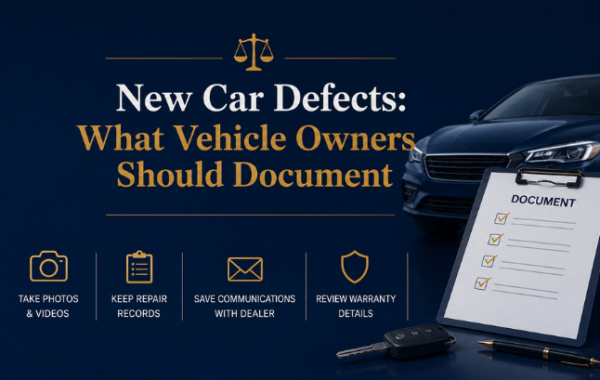
Recurring defect after multiple repair attempts: Repeated repair attempts for the same substantial defect are often central to lemon law, warranty, and consumer protection claims. Keep every repair order and ask the shop to describe the problem accurately.
Evidence and Documents You Should Keep
Whether you pursue a lemon law claim, a warranty claim, or a consumer protection complaint, documentation is critical. Keep copies of:
- Purchase agreement or bill of sale, including any as-is disclosure
- FTC Buyers Guide or state equivalent, if one was provided
- Written warranty documents, including dealer, manufacturer, or certified pre-owned warranties
- Repair orders and invoices, including dates, mileage, complaints, and repair notes
- Emails, letters, text messages, and written complaints to the dealer or manufacturer
- Vehicle history report, title history, accident report, or inspection paperwork
- Odometer readings at purchase and at each repair visit
- Photos, videos, dashboard warnings, tow records, and rental car receipts, if relevant
Mistakes to Avoid
| Mistake | Why It Hurts Your Position |
| Not keeping repair receipts or invoices | Without dated records, it is difficult to prove repeated repair attempts for the same defect. |
| Assuming as-is means no protection at all | Some disclosure, fraud, inspection, or consumer protection remedies may still exist even after an as-is sale. |
| Waiting too long to act | Many remedies are tied to warranty periods, mileage limits, notice deadlines, arbitration deadlines, or court filing deadlines. |
| Relying only on verbal promises | Spoken promises are difficult to enforce. Get warranty promises, repair promises, and return policies in writing. |
| Assuming your state’s law matches another state’s law | Lemon law rules differ significantly. A rule that applies in New York may not apply in Texas, California, or Georgia. |
| Repairing the car elsewhere before notifying the dealer | Some warranty laws require notice and an opportunity to repair before the buyer uses other remedies. |
When Should You Talk to an Attorney?
Consider speaking with a consumer protection or lemon law attorney if:
- The dealer or manufacturer has refused multiple times to fix a recurring safety-related problem.
- The same defect continues after repeated repair attempts.
- The car has been out of service for a significant amount of time.
- You suspect the dealer concealed known defects, prior accidents, flood damage, title problems, or odometer issues.
- You are not sure whether your state lemon law, warranty law, or consumer protection law applies.
- You are approaching a warranty expiration, mileage limit, or filing deadline.
- The dealer or manufacturer offers a settlement and asks you to sign a release.
Many consumer protection and lemon law attorneys offer free initial consultations. In some situations, a successful claimant may be able to recover attorney’s fees from the manufacturer, dealer, or warrantor, depending on the law that applies.
Practical Next Steps
1. Gather your purchase agreement, warranty paperwork, Buyers Guide, repair orders, and all communications.
2. Check whether your state has a used-car lemon law or a used-car warranty statute.
3. Review whether the vehicle was sold as is, with a dealer warranty, with a manufacturer’s warranty, or as certified pre-owned.
4. Notify the dealer, manufacturer, or warrantor in writing and keep proof of delivery.
5. Ask for a written repair plan or final repair attempt if your state or warranty requires it.
6. If the issue is not resolved, file a complaint with your state attorney general, consumer protection agency, motor vehicle agency, or the FTC.
7. Speak with a qualified attorney before signing a settlement, release, arbitration form, or buyback agreement.
Used Car Lemon Law Rights: Know Where You Stand Before You Act
So, does lemon law apply to used cars? Sometimes. The answer depends on your state, how the car was sold, whether a warranty applies, and whether the defect substantially affects the vehicle’s safety, use, or value.
Some states provide direct used-car lemon law protections. Others offer more limited remedies through written warranties, implied warranties, the FTC Used Car Rule, inspection requirements, or general consumer protection laws. If you are dealing with a defective used vehicle, start by gathering your paperwork and confirming the law in your state. From there, a consumer protection agency or qualified attorney can help you understand your realistic options.
Frequently Asked Questions
Is a used car covered under lemon law?
It depends on your state and the vehicle’s warranty status. Some states have dedicated used-car lemon laws or used-car warranty statutes. Others mostly limit lemon law remedies to new or leased vehicles. If no lemon law applies, warranty law, consumer protection law, or fraud-based claims may still be available.
Do lemon laws apply to cars bought as is?
Usually not in the same way they apply to warrantied vehicles. As-is sales often limit warranty remedies. However, an as-is sale does not always protect a dealer from claims based on fraud, misrepresentation, odometer issues, title problems, or required disclosure violations.
What states have used car lemon laws?
States such as New York and Massachusetts have specific used-car protections. Maryland can protect later owners in limited circumstances if the vehicle is still within its age and mileage limits. New Mexico provides a short warranty period for used cars sold by licensed dealers. Other states may provide different protections through warranty, inspection, or consumer protection laws. Always verify current rules with official state sources.
Does California lemon law cover used cars?
California used-car coverage is more limited after Rodriguez v. FCA. A used vehicle purchased with only the unexpired balance of the original manufacturer’s new-car warranty may not qualify for Song-Beverly refund-or-replacement remedies unless the new-car warranty was issued with that sale. Some used vehicles may still have other warranty or contract remedies, so California buyers should review their sale documents with a qualified attorney.
Does the Magnuson-Moss Warranty Act help with a used car?
It can help if the used car came with a written warranty from the dealer or manufacturer. The Magnuson-Moss Warranty Act governs written consumer warranties and may help enforce warranty obligations, but it does not automatically turn every defective used car into a lemon law case.
Can you get a refund on a used car lemon?
A refund may be possible if your state’s lemon law, warranty law, or consumer protection law applies and the required conditions are met. Outcomes depend on the state, the warranty, the defect, repair history, notice requirements, and deadlines. There is no guaranteed result.
Does lemon law cover private-party used car sales?
Generally, no. Most lemon laws focus on dealer sales, manufacturers, or warrantors. Private-party buyers usually need to look at fraud, misrepresentation, title, odometer, or contract claims instead.
How long do I have to file a used car lemon law claim?
Deadlines vary by state and by type of claim. Some periods are tied to warranty coverage, mileage, repair attempts, arbitration programs, or court statutes of limitation. If the car is still under warranty or has a serious defect, act quickly and confirm the deadline in your state.
What is considered a substantial defect under lemon law?
A substantial defect is generally a problem that significantly affects the vehicle’s safety, use, or market value. Examples may include recurring brake failure, steering issues, serious engine problems, transmission failure, or repeated electrical failures that affect operation. Minor cosmetic issues usually do not qualify.
Can I sue a dealer directly if lemon law does not apply?
Possibly. Depending on the facts, claims for fraud, misrepresentation, breach of warranty, unfair trade practices, odometer violations, or title problems may be available even when a dedicated used-car lemon law does not apply. A qualified attorney can evaluate which claim fits your situation.
This article is for general informational purposes only and does not provide legal advice. Laws and procedures may vary by state, city, court, agency, vehicle, warranty, and individual situation. For advice about your specific legal issue, speak with a qualified attorney or the appropriate government agency.