A jacIf you slipped and fell on someone else’s property, one question probably comes to mind right away: who is responsible? Not every fall leads to a valid legal claim. To recover compensation, you generally have to show that a property owner or another party was negligent — and that their negligence caused your injury.
This matters because slip and fall cases are rarely as simple as “I fell, so someone owes me money.” Property owners and their insurance companies often argue that the hazard wasn’t their fault, that they didn’t know about it, or that you weren’t paying attention. Understanding what you actually need to prove can help you make sense of your situation before you talk to an attorney or an insurance adjuster.
This article explains, in plain English, how to prove negligence in a slip and fall claim, what evidence typically matters, and how state law can change the outcome.
Quick Answer
To prove negligence in a slip and fall claim, you generally need to show four things: the property owner owed you a duty of care, they breached that duty by failing to fix or warn about a hazard, that breach directly caused your fall, and you suffered real damages (such as medical bills or lost income) as a result. You also typically must show the owner knew, or reasonably should have known, about the dangerous condition. Because the exact rules vary by state, the strength of any slip and fall negligence claim depends heavily on the specific facts and the law where the accident happened.
Quick Summary
- Proving negligence in a slip and fall case generally requires four elements: duty, breach, causation, and damages.
- You usually must show the property owner knew or should have known about the hazard and failed to fix or warn about it.
- Evidence such as photos, incident reports, witness statements, and medical records can directly affect the strength of a claim.
- Most states reduce or bar compensation if you were also partly at fault — called comparative or contributory negligence.
- Filing deadlines (statutes of limitations) vary by state and can be shorter for claims against government property.
- This article is general information only; an attorney licensed in your state can evaluate your specific situation.
What Does “Negligence” Mean in a Slip and Fall Case?
In everyday language, negligence just means carelessness. In law, it has a more specific meaning. Negligence in a premises liability claim, the legal category that covers most slip and fall cases, generally requires proving four elements.
These elements appear consistently across U.S. personal injury law, although the exact wording and standard of proof can vary by state.
The Four Elements of a Slip and Fall Negligence Claim
- Duty of care: The property owner or occupier had a legal obligation to keep the property reasonably safe for visitors.
- Breach of duty: The owner failed to meet that obligation, for example by ignoring a spill, a broken stair, or poor lighting.
- Causation: The unsafe condition was a direct cause of your fall and resulting injury, not just present somewhere nearby.
- Damages: You suffered actual losses, such as medical expenses, lost wages, or pain and suffering, because of the fall.
If any one of these four elements is missing, a slip and fall negligence claim is unlikely to succeed. For example, simply falling on a floor that had no hazard, or falling because of your own misstep, does not by itself establish negligence.
Who Owes a Duty of Care, and to Whom?
Not everyone on a property is owed the same level of protection. Many states classify visitors into categories that affect how much duty of care a property owner owes.
- Invitees: People invited onto the property for business purposes, such as customers in a store. Owners generally owe invitees the highest duty of care, including reasonable inspections.
- Licensees: People who enter with permission but for their own purposes, such as social guests. Owners typically must warn licensees of known hazards but are not always required to actively search for unknown ones.
- Trespassers: People on the property without permission. Owners generally owe little to no duty of care to trespassers, though most states still prohibit intentional harm.
Because these categories and duties differ by state, the exact protections you’re entitled to can depend heavily on where the fall happened and your relationship to the property.
How Property Owner Knowledge Affects a Claim
A central question in most slip and fall negligence claims is whether the property owner had notice of the hazard. Courts generally look at two types of knowledge:
- Actual knowledge: The owner or an employee directly knew about the hazard, for example a manager who saw a spill but didn’t clean it up.
- Constructive knowledge: The owner should have known about the hazard through reasonable inspection, even if no one personally saw it.
Timing often matters here. If a hazard existed for a long period without being addressed, that can support an argument that the owner should have discovered and fixed it through routine inspections. If the condition appeared moments before the fall, for example a customer just dropped something, it may be harder to show the owner had a reasonable chance to respond.
Common Examples of Slip and Fall Negligence
Negligence in a slip and fall case can come from something a property owner did, or something they failed to do. Common examples include:
- Failing to clean up spilled liquids or food in a store aisle within a reasonable time
- Leaving broken or uneven flooring, tiles, or pavement unrepaired
- Failing to provide adequate lighting in stairwells, parking lots, or hallways
- Not placing warning signs or barriers around a known hazard, such as a wet floor
- Allowing snow or ice to accumulate on walkways without timely removal or salting
- Missing or broken handrails on stairs
Keep in mind that a hazard existing on a property is not automatically proof of negligence. The hazard has to be one the owner knew or should have known about, and failed to reasonably address.
The “Open and Obvious” Defense
Property owners frequently raise the open and obvious doctrine as a defense. This argument claims that the hazard, such as a visible patch of ice or a large obstacle, was so apparent that a reasonable person should have noticed and avoided it.
How much this defense matters varies significantly by state. Some states treat an open and obvious hazard as a strong or complete defense. Others, including states that have moved away from a strict version of this rule, treat it as just one factor among several, especially if the owner should have anticipated that visitors might be distracted or unable to avoid the hazard. Because this area of law changes by jurisdiction and even by court ruling, it’s worth discussing with a local attorney if this defense comes up in your situation.
How Your Own Actions Can Affect the Claim
Property owners and insurers often argue that the injured person shares some blame for the fall, for example by being distracted, ignoring a posted warning, or wearing unstable footwear. How this affects your claim depends entirely on your state’s fault rules.
- Pure comparative negligence: You can recover damages reduced by your percentage of fault, even if you were mostly responsible.
- Modified comparative negligence: You can recover reduced damages only if your fault stays below a state-specific threshold, commonly 50% or 51%.
- Contributory negligence: In a small number of states, any fault on your part, even a small percentage, can bar you from recovering anything.
Because this rule can completely change the outcome of a claim, it’s one of the most important state-specific factors in any slip and fall case.
Evidence That Helps Prove Negligence
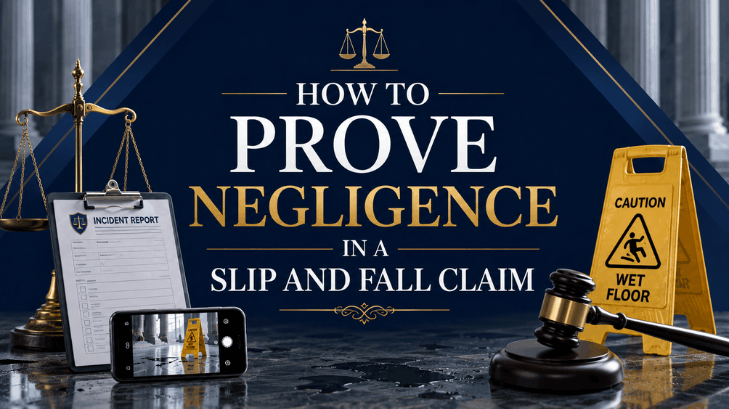
Strong slip and fall claims are built on documented, verifiable evidence rather than just a description of what happened. Common categories of useful evidence include photographs of the hazard, incident or accident reports, witness contact information and statements, medical records linking your injuries to the fall, and maintenance or inspection logs if available.
Evidence is more persuasive when it’s collected promptly. Hazards get cleaned up, surveillance footage may be deleted on a routine schedule, and memories fade. Reporting the fall to the property owner or manager and seeking prompt medical care also helps create a contemporaneous record connecting the hazard to your injury.
Timelines: Statutes of Limitations
Every state sets a statute of limitations, a strict deadline for filing a personal injury lawsuit. For slip and fall cases, this period commonly ranges from about one to four years depending on the state, though some states allow longer. If you miss this deadline, a court will typically dismiss the case regardless of how strong the evidence is.
Claims involving government-owned property, such as a fall on a public sidewalk or in a government building, often involve shorter notice deadlines, sometimes just a matter of months, along with special procedural requirements. If your fall happened on public property, this is an important detail to raise with an attorney as early as possible.
Mistakes That Can Weaken a Slip and Fall Claim
- Waiting too long to report the fall to the property owner or manager
- Not seeking medical attention promptly, which can make it harder to link injuries to the fall
- Giving a detailed recorded statement to an insurance adjuster before understanding your rights
- Posting about the accident or your activities on social media
- Not preserving evidence, such as the shoes you were wearing or photos of the scene
- Missing your state’s filing deadline
When to Speak With an Attorney
Not every slip and fall requires a lawyer, especially for minor injuries with no real dispute about what happened. However, speaking with a personal injury attorney is often worthwhile if your injuries are significant, the property owner or insurer disputes responsibility, you’re unsure about your state’s comparative negligence rules, or a government entity is involved. Many personal injury attorneys offer free initial consultations, which can help you understand your options without committing to anything.
Practical Next Steps After a Slip and Fall
- Seek medical attention, even if injuries seem minor at first
- Report the incident to the property owner, manager, or relevant agency and request a written incident report
- Photograph the hazard, your injuries, and the surrounding area as soon as possible
- Get names and contact information for any witnesses
- Keep all medical bills, records, and receipts related to your injury
- Avoid giving detailed statements to insurance companies until you understand your rights
- Consult a qualified attorney in your state, particularly if injuries are serious or fault is disputed
Evidence Checklist for a Slip and Fall Negligence Claim
| Evidence Type | Why It Matters |
|---|---|
| Photos or video of the hazard | Documents the condition before it can be cleaned up, repaired, or removed |
| Incident or accident report | Creates an official, time-stamped record of what happened and where |
| Witness names and statements | Can confirm how long the hazard existed or how the fall occurred |
| Medical records and bills | Links your injuries directly to the fall and documents financial damages |
| Maintenance or inspection logs | May show whether the property owner inspected the area or ignored a known issue |
| Footwear worn at the time | Can help address arguments about your own potential contributing fault |
| Weather reports (if outdoors) | Relevant when ice, snow, or rain may have contributed to the hazard |
Understand Your Rights Before You Take the Next Step
Proving negligence in a slip and fall claim comes down to showing that a property owner had a duty to keep their premises safe, failed to meet that duty, and that failure directly caused your injury and resulting damages. Because the specific rules around duty of care, open and obvious hazards, and comparative fault vary significantly from state to state, the same set of facts can lead to very different outcomes depending on where the fall happened and what damages you may be able to recover.
If you’re dealing with a slip and fall injury, focus first on your health and on documenting what happened while details are still fresh. From there, a qualified attorney in your state can help you understand whether you have a viable slip and fall negligence claim and what evidence will matter most for your specific situation.
Frequently Asked Questions
What’s the difference between a slip and fall claim and a trip and fall claim?
Both fall under premises liability law and use the same negligence framework. The terms simply describe how the fall happened — slipping on a surface versus tripping over an object or uneven ground. The legal elements you need to prove are generally the same either way.
Can I file a claim if I fell at a friend’s house?
Possibly, depending on your state’s rules for licensees and the specific circumstances. Homeowners generally must warn guests of known hazards that aren’t obvious. However, claims against individuals (rather than businesses) often involve homeowners’ insurance and can raise sensitive personal dynamics, so many people consult an attorney before proceeding.
What if the property owner says they didn’t know about the hazard?
This is a common defense. Evidence such as maintenance logs, prior complaints, surveillance footage, or witness statements showing how long the hazard existed can help establish that the owner should have known, even without direct proof they personally saw it.
Does it matter if I was wearing flip-flops or high heels when I fell?
It can. Footwear choices are sometimes raised by property owners as evidence of comparative fault. Whether and how much this affects a claim depends on the specific facts and your state’s comparative negligence rules.
Is a slip and fall claim the same as a workers’ compensation claim?
No. If a slip and fall happens at work, it may be handled through your state’s workers’ compensation system rather than, or sometimes alongside, a premises liability claim against a separate property owner. The rules and processes differ, so workplace falls often involve different next steps.
Will my slip and fall claim go to trial?
Most slip and fall claims are resolved through negotiation with an insurance company rather than going to trial. Whether your case settles or proceeds to litigation depends on factors like how strong the evidence is and whether the parties can agree on a fair resolution.
People Also Ask
What is the hardest part of proving a slip and fall case?
Often, the hardest part is proving the property owner knew, or should have known, about the hazard before you fell. Without evidence like inspection logs, prior complaints, or witness accounts showing how long the condition existed, owners can argue they had no reasonable opportunity to fix or warn about it.
Do I need a lawyer to prove negligence in a slip and fall case?
Not always, but it often helps. Attorneys can gather evidence, interpret your state’s specific premises liability rules, and negotiate with insurance companies. For minor injuries with clear fault, some people pursue a claim without a lawyer, but more complex or disputed cases usually benefit from legal guidance.
Can I still recover compensation if I was partly at fault?
It depends on your state. In comparative negligence states, you may still recover damages reduced by your percentage of fault. In contributory negligence states, any fault on your part can bar recovery entirely. Checking your specific state’s rule is essential.
How long do I have to file a slip and fall lawsuit?
This depends on your state’s statute of limitations, which commonly ranges from about one to four years for personal injury claims, though it can be shorter for claims against government property. Missing this deadline generally prevents you from filing a lawsuit at all.
Does a wet floor sign automatically protect a business from liability?
Not automatically. A warning sign can help show the business tried to address the hazard, but it doesn’t guarantee protection from liability, especially if the hazard existed for an unreasonable amount of time before the sign was placed or if the sign wasn’t clearly visible.
This article is for general informational purposes only and does not provide legal advice. Laws and procedures may vary by state, city, court, agency, or individual situation. For advice about your specific legal issue, speak with a qualified attorney or the appropriate government agency.